Comfortable Shoes to Wear with a Mother of the Bride Outfit
Why Mother of the Bride Shoes Matter
Everyone obsesses over the dress. The colour, the beading, the way it moves when you walk down the aisle behind the bridal party. Shoes get bought in the last fortnight, usually online, usually a size that “should be fine.” Then the wedding day arrives and you’re standing on a lawn, or a polished timber dance floor, for six or seven hours straight, and the shoes are the thing you can’t stop thinking about.
That’s the practical reason shoes matter. There’s also a styling one. Photographers shoot from low angles constantly, hemlines lift in the breeze, and during the reception you’ll kick back in a chair with your feet visible in half the candid shots. A scuffed heel or a shoe that doesn’t sit right with the dress colour shows up in photos you’ll look at for decades.
Comfort and style aren’t opposing goals here, they’re the same goal. A shoe that pinches by 3pm changes how you stand, how you smile, how present you are for your own child’s wedding. If you’re still working out your overall look, browsing the mother of the bride dresses range first gives you a silhouette and colour to build the shoe choice around, rather than guessing.
Choosing the Right Shoes
Start with the venue, not the shoe rack. A beach ceremony on the Sunshine Coast rules out stilettos before you even open the catalogue. A ballroom reception in Melbourne means polished timber or marble, which is genuinely one of the more forgiving surfaces for heels, provided the heel tip isn’t worn down to bare metal.
Next, work out how many hours you’ll actually be upright. Most mothers underestimate this. Between the ceremony, family photos, cocktail hour and the reception, you’re looking at five to eight hours on your feet with maybe twenty minutes of sitting scattered through. That single fact should drive your heel height more than anything else.
A few rules that hold up in practice:
- Heel height of 3cm to 6cm keeps you stable without looking like you’ve given up on dressing up.
- A block or wedge heel distributes weight across a wider base than a stiletto, which matters enormously on grass, cobblestones or uneven garden paths.
- Leather or soft fabric uppers stretch slightly with wear; synthetic uppers generally don’t, so they need to fit correctly from day one.
- A cushioned insole (or an aftermarket gel insert) is worth the $15 it costs, every single time.
Colour is the other half of the decision. Matching your shoe exactly to your dress reads as a bit dated now; a near-match or a deliberate contrast (nude with a navy dress, for instance) tends to look more considered. If you’ve settled on something in the blush mother of the bride dresses collection, a metallic or soft gold shoe usually reads better than an exact blush match, which can wash out under reception lighting.
Top Styles and Options
There isn’t one “correct” mother of the bride shoe, but a handful of styles cover almost every dress and venue combination we see.
Block Heel Pumps
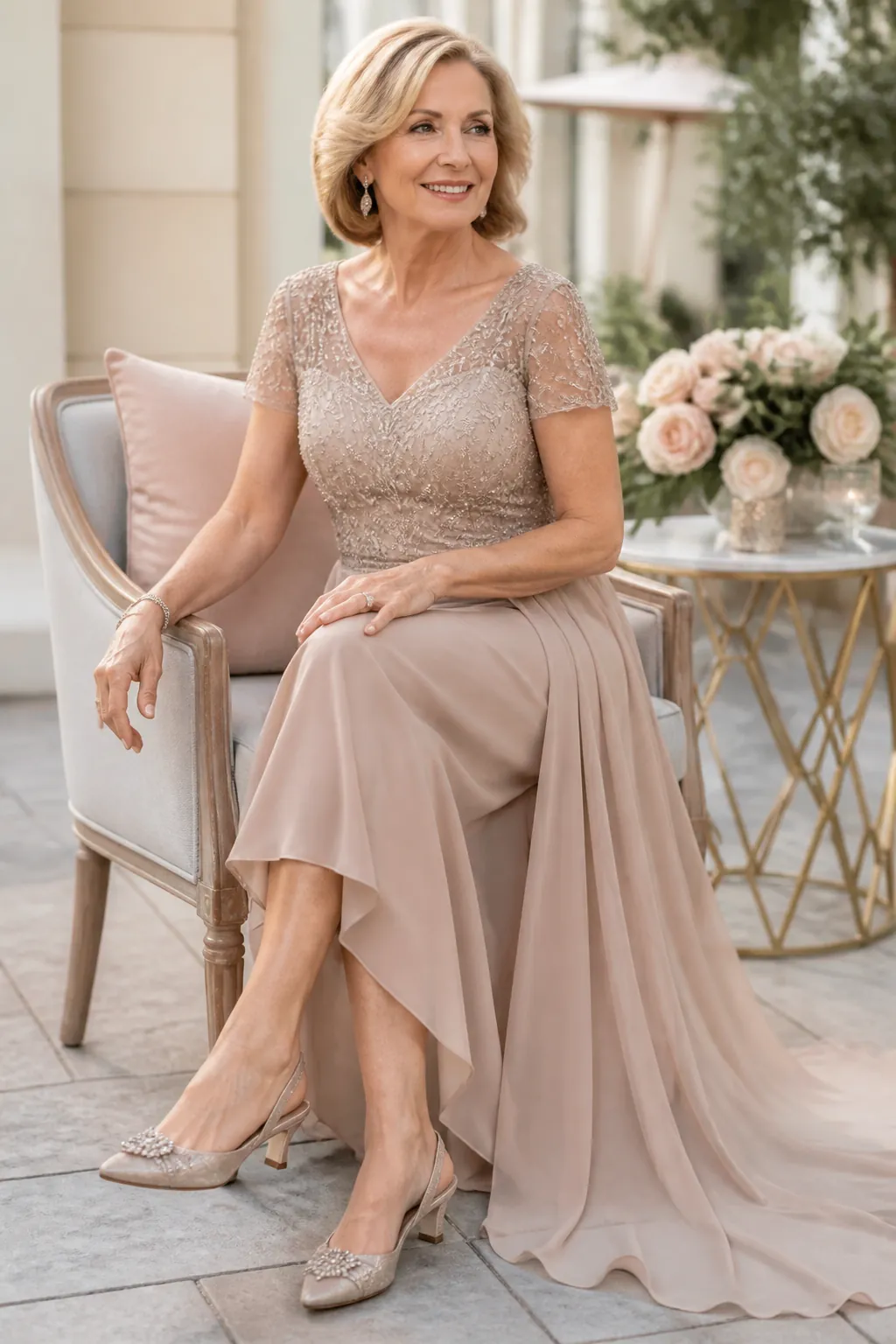
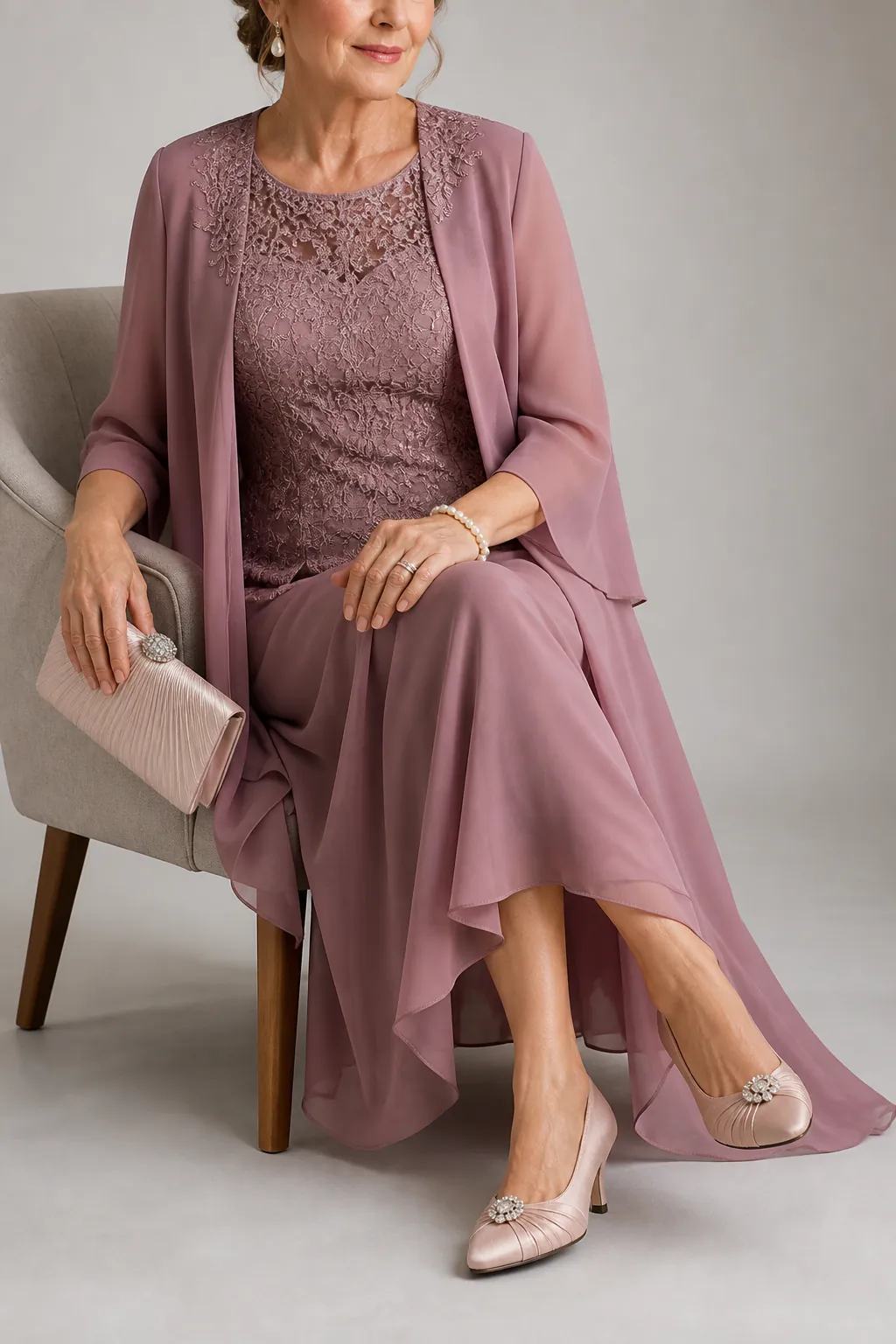
The workhorse of the category. A block heel between 4cm and 6cm gives you height and presence in photos without the instability of a stiletto. These pair well with almost anything, including the structured silhouettes you’ll find in the Adrianna Papell dresses range, where the shoe needs to hold its own against a fairly detailed bodice.
Low Wedges
If the ceremony is outdoors, on grass or gravel, a wedge is genuinely the smarter call over a heel, not just the “safe” one. The sole doesn’t sink, and you get the same 5cm to 7cm of height without the ankle-rolling risk. Espadrille-style wedges have crept into more formal weddings too, particularly for daytime events.
Embellished Flats
For mothers who’ve decided comfort wins outright, a beaded or embellished flat closes the gap between “sensible shoe” and “occasion shoe.” They work particularly well under a longer hemline or alongside a heavily detailed gown, like something from the beaded dresses collection, where the shoe can afford to sit quietly and let the dress do the talking.
Ankle Strap Sandals
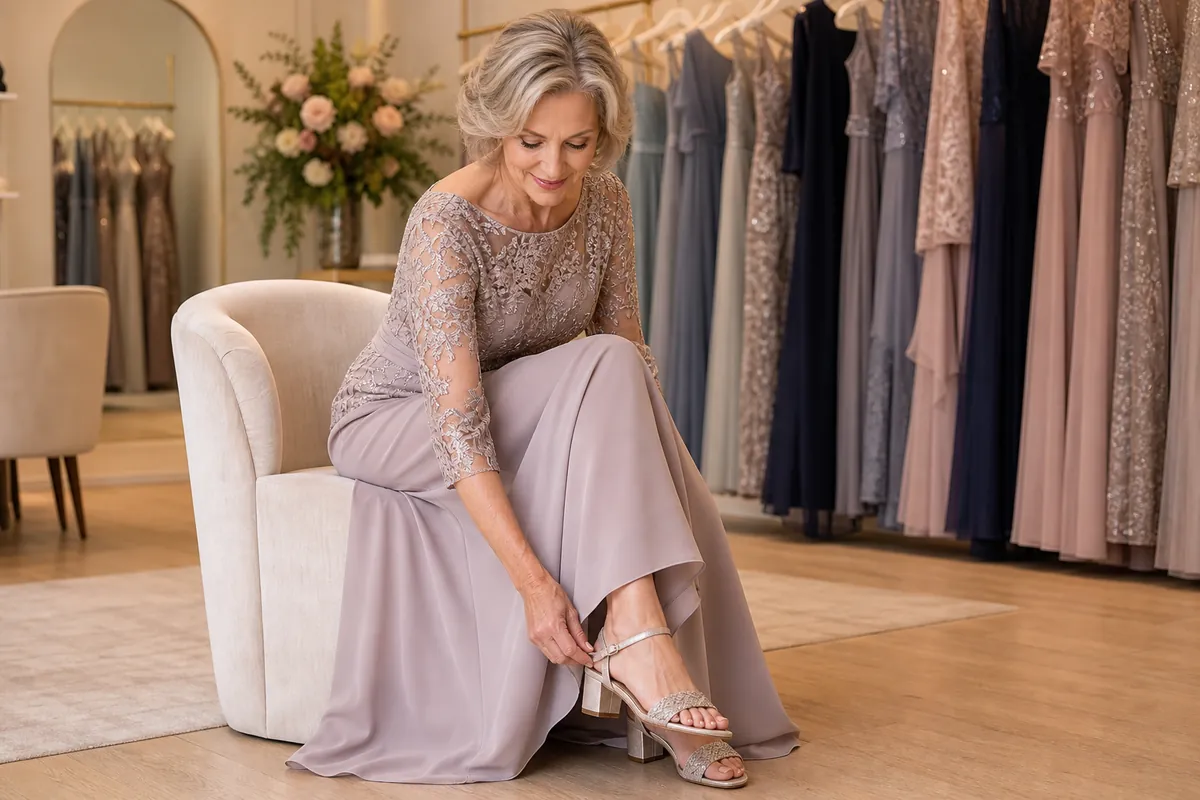
Open-toe sandals with an ankle strap are the most popular choice for summer weddings, and the strap is doing more work than people realise. It stops the shoe slipping when your foot swells slightly after a few hours standing, which is a normal and completely unglamorous thing that happens to almost everyone by the end of a long reception.
What to Consider Before You Buy
Buy earlier than feels necessary. Two to three weeks before the wedding gives you time to wear the shoes around the house, on carpet and hard floor both, and return them if they’re wrong. Shoes bought four days out are shoes you’ll be limping in.
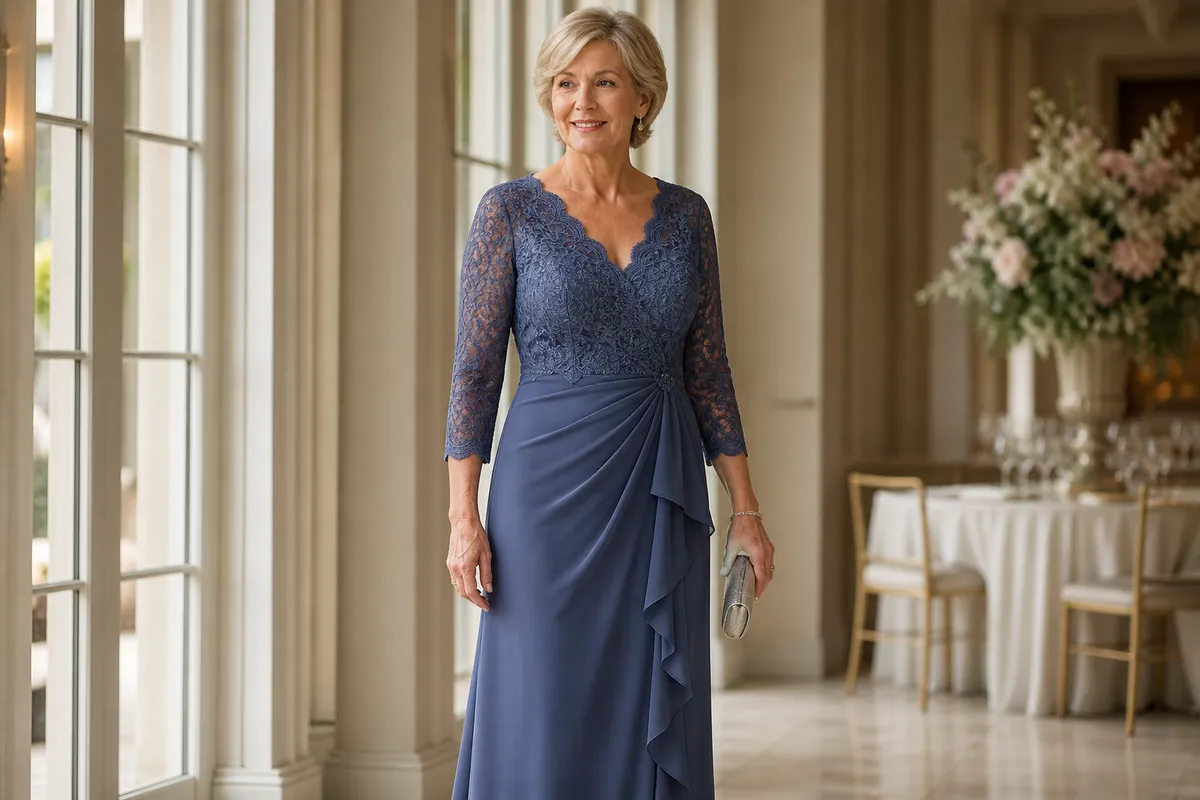
Think about how the shoe interacts with the hemline. A floor-length gown hides most of the shoe, so comfort can outweigh style almost entirely, nobody’s going to see the shoe unless you sit down. A tea-length or midi hem puts the shoe on full display, so it needs to genuinely coordinate, not just “not clash.” If you’re deciding between lengths, it’s worth trying dresses and shoes together before either purchase is final, particularly with fuller styles like those in the black mother of the bride dresses range, where a floor-length silhouette changes the shoe brief completely.
Weather is worth a proper think, not a passing one. Any wedding scheduled for a coastal or garden venue between November and March in Australia means heat, and heat means feet swell. Buy a shoe with a little room, not one that’s snug and “will loosen up.” A half-size up with a good insole beats a true-to-size shoe that’s tight by 4pm.
Budget sensibly across the whole outfit rather than treating the dress and shoes as separate purchases. A $600 gown paired with $40 shoes usually looks like exactly that in photos. Aim to put roughly 15 to 20 percent of your total outfit budget toward footwear, and that figure holds whether you’re in something from the blue mothers of the bride dresses collection or a warmer tone like the brown mother of the bride dresses range.
Don’t overlook the practical extras: a small flat pair stashed in your bag for the dance floor, clear heel protectors if the reception is on grass or a soft lawn, and a spare pair of stockings. None of it’s glamorous, all of it saves the night.
Tips from the Experts
Bridal stylists and podiatrists agree on more than you’d expect here. A few pieces of advice come up again and again, and they’re worth taking seriously rather than filing under “nice in theory.”
Break shoes in properly, meaning actual walking around the house for twenty to thirty minutes a day, not just standing at the kitchen bench. This softens the sole and reveals rubbing points while there’s still time to fix them with a shoe stretcher or a trip back to the shop.
Podiatrists consistently recommend a heel no higher than 5cm for anyone who’ll be standing more than three hours, which describes almost every wedding day. Beyond that height, weight shifts forward onto the ball of the foot and the discomfort compounds fast, usually somewhere between the second course and the speeches.
Stylists tend to push back on the instinct to exactly colour-match the shoe to the dress. A near-tone or a metallic (gold, pewter, rose gold) photographs better under reception lighting than a flat colour match, which can look slightly costume-y in flash photography. If you’re building a look around the mother of the groom dresses collection, the same logic applies, a metallic shoe usually reads more elegant than an exact match.
Finally, always try shoes on in the afternoon, not the morning. Feet are measurably larger later in the day, and a shoe that fits perfectly at 9am can feel a full size too small by 6pm, which is exactly when you’ll be wearing it at the actual event.
Frequently Asked Questions
What Are the Best Mother of the Bride Shoes?
A block heel or low wedge between 3cm and 6cm generally works best, since it gives you height for photos without the instability of a stiletto over a long day. Leather or soft fabric uppers with a cushioned insole hold up better across a six-hour event than synthetic materials or thin soles.
Which Mother of the Bride Shoes Suit Me?
Start with your venue and dress length rather than the shoe itself. Outdoor or grass venues call for a wedge, floor-length gowns hide the shoe so comfort can lead the decision, and shorter hemlines need a shoe that genuinely coordinates with the dress colour.
What Should I Look for When Buying Shoes?
Prioritise heel height, sole stability and a little extra room for your feet to swell over the course of the day. Buy at least two weeks before the wedding and try shoes on in the afternoon, when feet are at their largest, rather than first thing in the morning.
Are There Budget-Friendly Shoe Options?
Yes, block heel pumps and embellished flats in the $60 to $120 range are widely available and hold up well for a single wedding day. A cheap $15 gel insole added to a mid-range shoe often does more for comfort than spending double on the shoe itself.