Petite Mother of the Bride Dresses: Sizing and Styling Tips
Why Petite Fit Matters
If you’re under about 162cm, you already know the problem with a lot of formal wear: it’s not that the dress is too big, it’s that everything is in the wrong place. A standard mother of the bride dress is drafted for someone around 168-173cm, so the waistline sits too low, the hemline pools on the floor, and sleeves finish somewhere near your knuckles instead of your wrist. Taking a hem up doesn’t fix that on its own, because the proportions of the bodice, the placement of a beaded waistband or the drop of a neckline were all designed for a taller torso.
This matters more at a wedding than almost any other occasion, because you’re standing next to the bride for photos, walking down an aisle, and being watched all day. A dress that’s fighting your proportions reads as “borrowed” even when it’s brand new and cost a fortune. Getting the petite fit right from the start, rather than trying to alter your way out of a standard-size dress, is the difference between looking pulled-together and looking like you’re wearing your daughter’s dress in reverse.
The good news is that Australian retailers have gotten a lot better at stocking true petite ranges in the last few years, particularly through brands like Adrianna Papell, who cut a genuine petite line rather than just shortening a regular pattern.
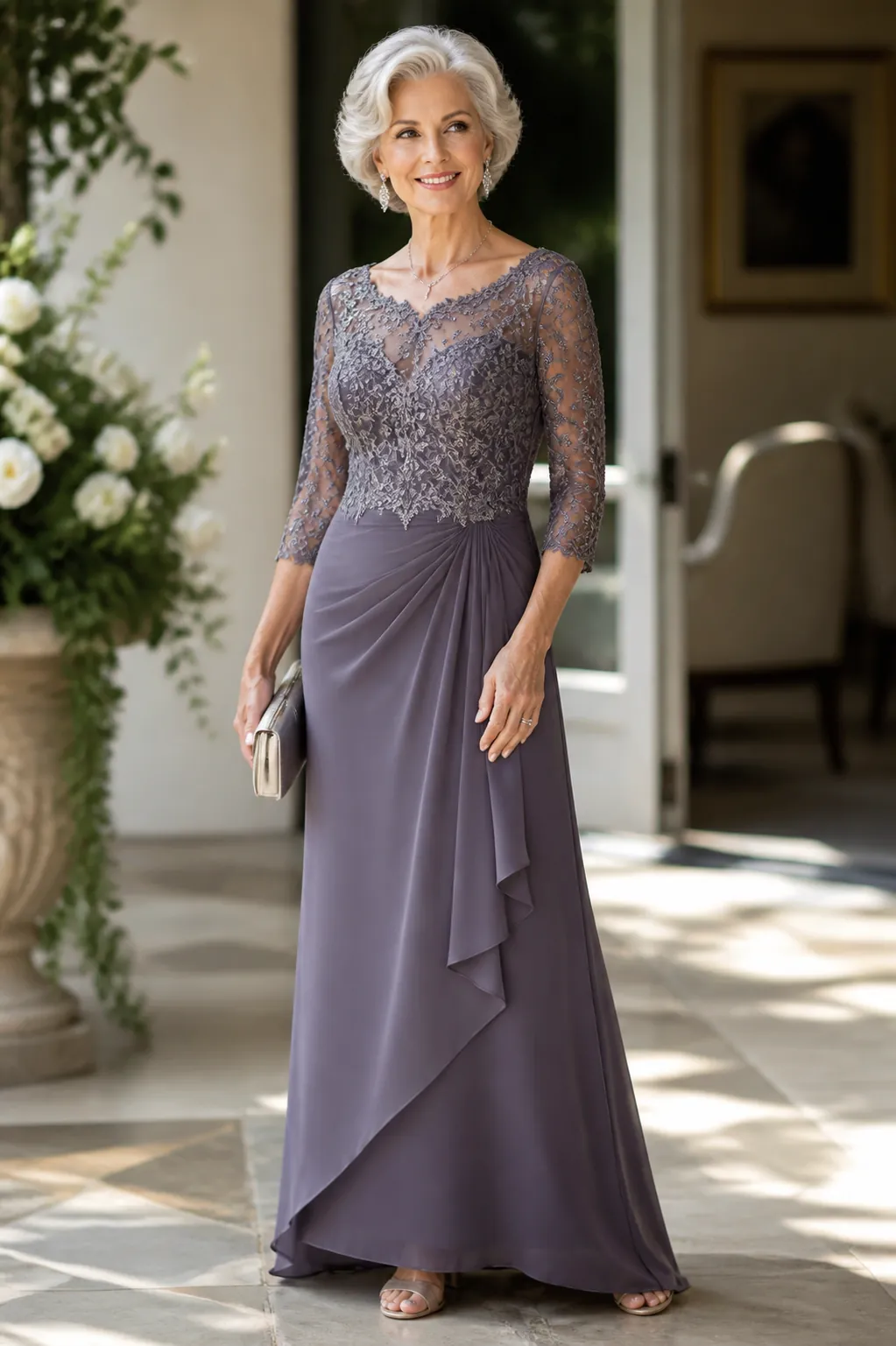
How to Choose the Right Fit
Start with your actual measurements, not your usual dress size. Petite sizing is really about three things: shoulder-to-waist length, waist-to-hem length, and arm length. A retailer that lists these separately (rather than just “petite = smaller size”) is worth paying attention to. Get someone to measure you properly with a soft tape rather than guessing, because most of us are off by a couple of centimetres on our own torso length.
Next, think about where the waistline sits on the dress you’re considering. Empire waistlines (sitting just under the bust) and dresses with a defined, fitted waist at your natural waistline both tend to work better on shorter frames than a dropped waist, which can visually shorten your legs even more. If you’re between a standard and petite size, the general rule is to buy for your shoulders and bust, then have the length altered, rather than buying petite and hoping the bodice stretches to fit.
It’s also worth browsing a dedicated mother of the bride dresses range rather than a general formal-wear category, because these collections are curated around the specific job the dress needs to do: photograph well, move comfortably through a long day, and read as elegant rather than costume-y.
Common sizing mistakes to avoid
The most common mistake we see is ordering true to your everyday dress size and assuming a tailor can fix everything. A tailor can shorten a hem and take in side seams, but they can’t easily move where a beaded panel or lace applique sits, and re-cutting a structured bodice is expensive and sometimes just not possible without ruining the line of the fabric. If you’re between sizes, it’s almost always cheaper and safer to size up slightly and have it taken in, rather than size down and hope it stretches.
Top Styles and Options
Some silhouettes are genuinely more forgiving on a petite frame than others, and it’s worth knowing which ones before you start trying things on.
A-line and fit-and-flare
A-line dresses with a fitted bodice and a skirt that flares gently from the waist are the most reliably flattering option for shorter women, because the vertical line from shoulder to hem elongates without adding bulk anywhere. Fit-and-flare works similarly but with a slightly closer skirt through the hip before flaring near the knee, which is a good option if you want more definition through the waist.
Beaded and embellished bodices
A beaded or embellished bodice draws the eye upward and creates visual interest above the waistline, which is exactly where you want attention on a petite frame. Browse the beaded dresses collection if you want something with presence for photos without needing a floor-length train to make a statement.
Midi and tea length
Don’t dismiss midi or tea-length dresses out of hand. On a taller woman they can look like they’ve been shortened by accident, but on a petite frame a well-cut midi that hits mid-calf can look intentional and modern, especially paired with a low heel. It also solves the “too much fabric pooling at the ankle” problem that full-length gowns often create for shorter women.
Colour and how it plays with height
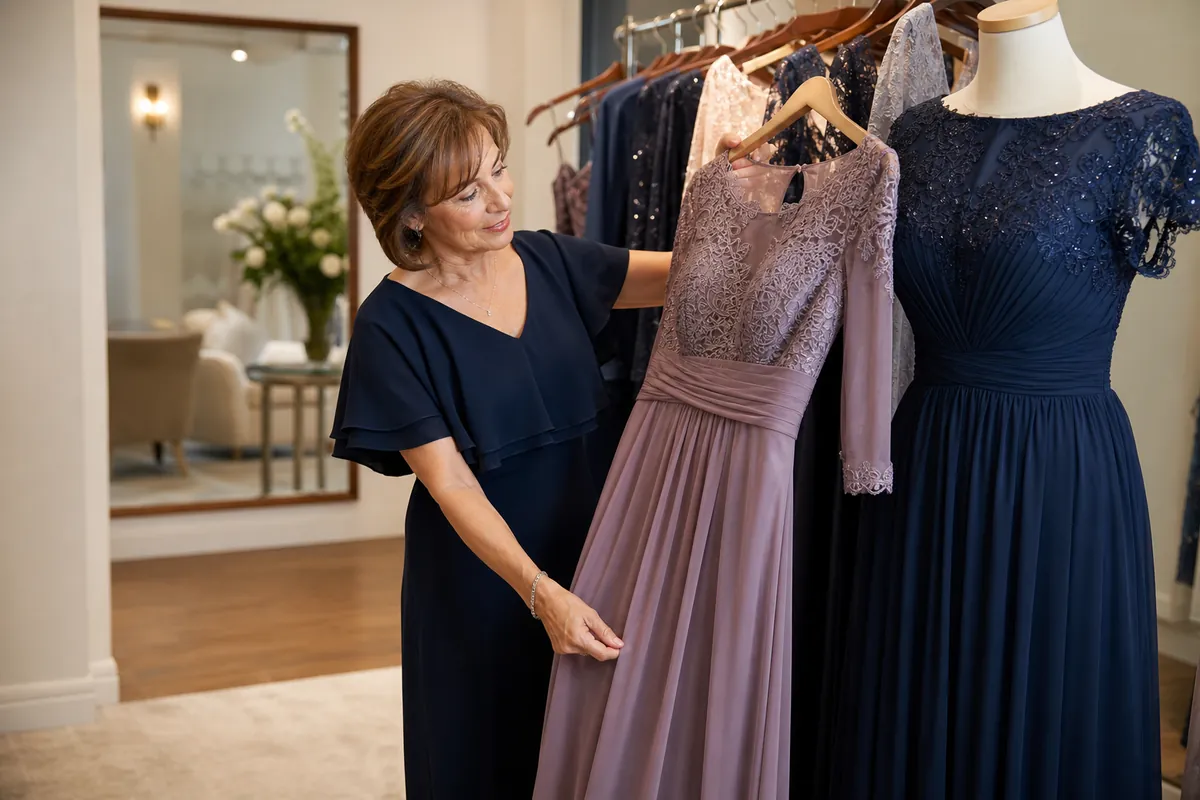
Colour blocking or a strong contrast between bodice and skirt can visually break up a petite frame in the wrong way, so a single tonal colour, or a very subtle ombre, tends to read taller. If you’re set on a specific shade, the blush mother of the bride dresses and blue mothers of the bride dresses ranges both stick mostly to single-tone gowns, which makes this easier. If you’d rather go darker and more formal, the black mothers of the bride dresses collection has a good spread of petite-friendly cuts, and warmer tones are covered in brown mother of the bride dresses if you want something that photographs well against an outdoor autumn ceremony.
If you’re shopping for the groom’s side rather than the bride’s, the same fit principles apply. The mother of the groom dresses range and the Adrianna Papell mother of the groom line both stock true petite sizing, and there’s a strong blush mother of the groom selection if you want something softer than black for a daytime event.
What to Consider Before You Buy
Before you commit, run through a short checklist. First, check the retailer’s actual petite size chart against your measurements rather than assuming petite sizing is standardised across brands, because it isn’t. One label’s petite 12 can be another’s petite 10, and the difference is usually in torso length rather than bust or hip.
Second, budget for alterations even on a genuine petite cut. A “petite” size is built for an average petite height, and you may still need a centimetre or two taken off the hem or the straps adjusted. Factor that cost and the turnaround time into your timeline, ideally allowing four to six weeks before the wedding for a first fitting and a follow-up.
Third, think about heel height when you try the dress on, or at minimum when you check the listed hem measurement. A dress hemmed for a 5cm heel will drag on the floor in flats, and one hemmed for flats will look cropped in heels. Bring or wear the actual shoes you plan to wear on the day to any fitting.
Finally, consider the fabric weight. Heavier fabrics like crepe or double georgette hang better and resist clinging, but they can also overwhelm a smaller frame if the dress has a lot of volume in the skirt. Lighter chiffon layers move more but need a well-fitted underlayer to avoid looking shapeless. According to bridal styling advice from Brides, fabric weight is one of the most overlooked factors in how a formal dress actually photographs, and it’s doubly true when you’re trying to avoid extra bulk on a shorter frame.
Tips from the Experts
Bridal stylists generally agree on a few practical rules for petite formal wear that are worth repeating here. Keep prints small and sparing if you use them at all, because a large-scale print can visually shrink a petite frame rather than flatter it. A slightly higher heel (even 3-4cm) shifts the proportion of leg to torso enough to matter, without needing to be uncomfortable for a full day standing.
Structured shoulders or a defined cap sleeve read better than a dropped or off-shoulder cut on a petite frame, because they keep the shoulder line crisp instead of letting fabric slump. And a matching or tonal shoe, rather than a contrasting one, keeps the leg line unbroken, which is a small detail that makes a bigger difference than most people expect.
Wedding etiquette guidance from The Knot also points out that mother of the bride and mother of the groom outfits should complement, not compete with, the bridal party’s colour palette, so it’s worth checking in with the bride before you finalise your shade. And if you’re shopping early, industry sizing standards published by Standards Australia note that “petite” isn’t a legally defined category the way some size labels are, which is exactly why measuring yourself against each retailer’s own chart matters more than trusting the label on the rack.
One more practical tip: photograph yourself in the dress under bright light before the day, not just in the fitting room mirror. Petite proportions can look fine standing still but shift once you’re walking, sitting, or being photographed from below at the altar, so a quick phone video walking across a room tells you more than a static mirror check ever will.
Frequently Asked Questions
What is the best petite mother of the bride dress?
There’s no single “best” style, but A-line and fit-and-flare dresses with a defined waist and a beaded or embellished bodice consistently work well on shorter frames. Brands that offer a true petite cut, such as Adrianna Papell, tend to outperform a standard dress that’s simply been hemmed shorter.
How do I know which petite fit is right for me?
Measure your shoulder-to-waist and waist-to-hem length rather than relying on your usual dress size, then compare those numbers against the retailer’s specific petite size chart. If you’re between sizes, buy for your shoulders and bust and plan to have the length altered.
What should I look for when buying petite formal wear?
Check the waistline placement (empire or natural waist rather than dropped), confirm the retailer’s petite chart matches your measurements, and budget time and money for alterations even on a genuine petite cut. Try the dress on with the actual shoes you’ll wear on the day.
Are there budget-friendly petite options available?
Yes, petite sizing doesn’t automatically mean a higher price tag, and ranges like the ones in the black or brown mother of the bride collections include a mix of price points. Buying slightly larger and altering down is often cheaper overall than chasing a rare exact-fit petite size.