Midi-Length Mother of the Bride Dresses for Modern Weddings
What Is a Midi Mother of the Bride Dress
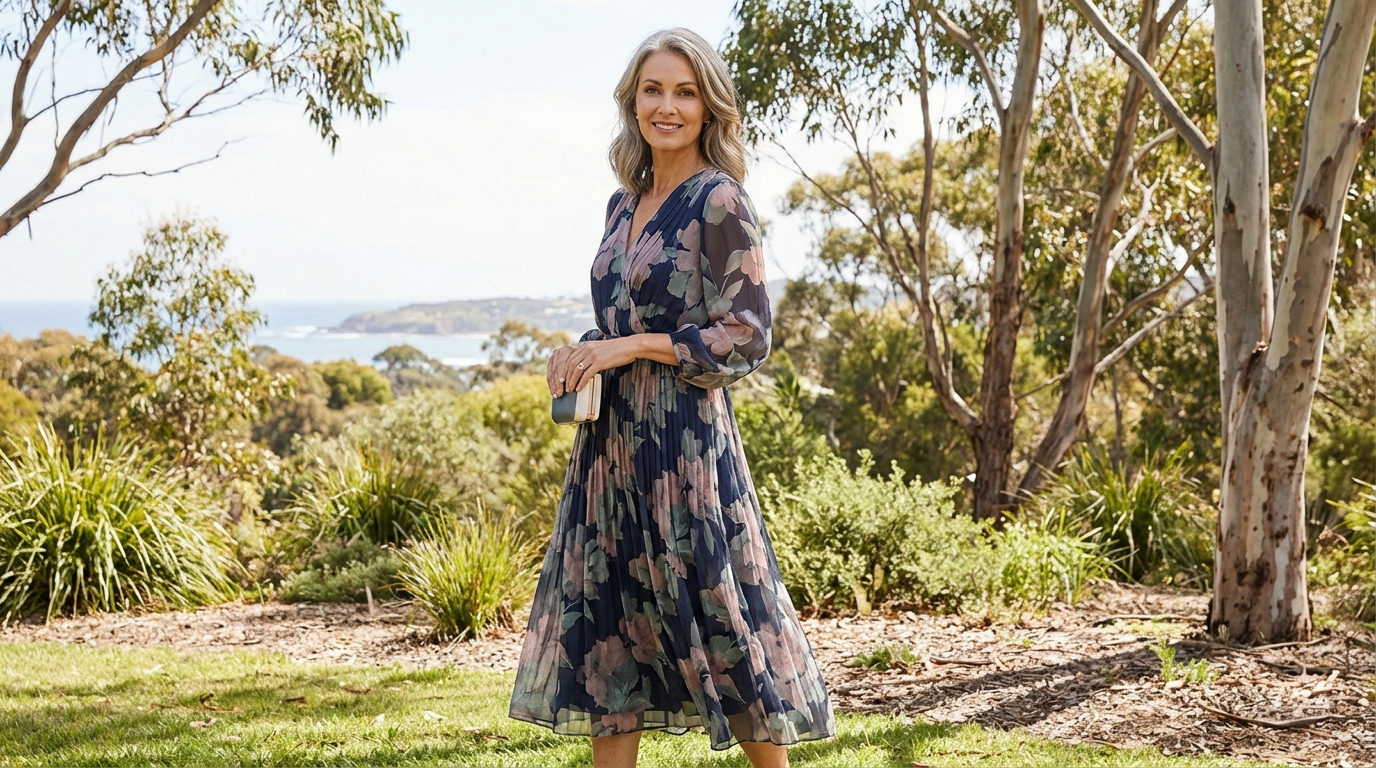
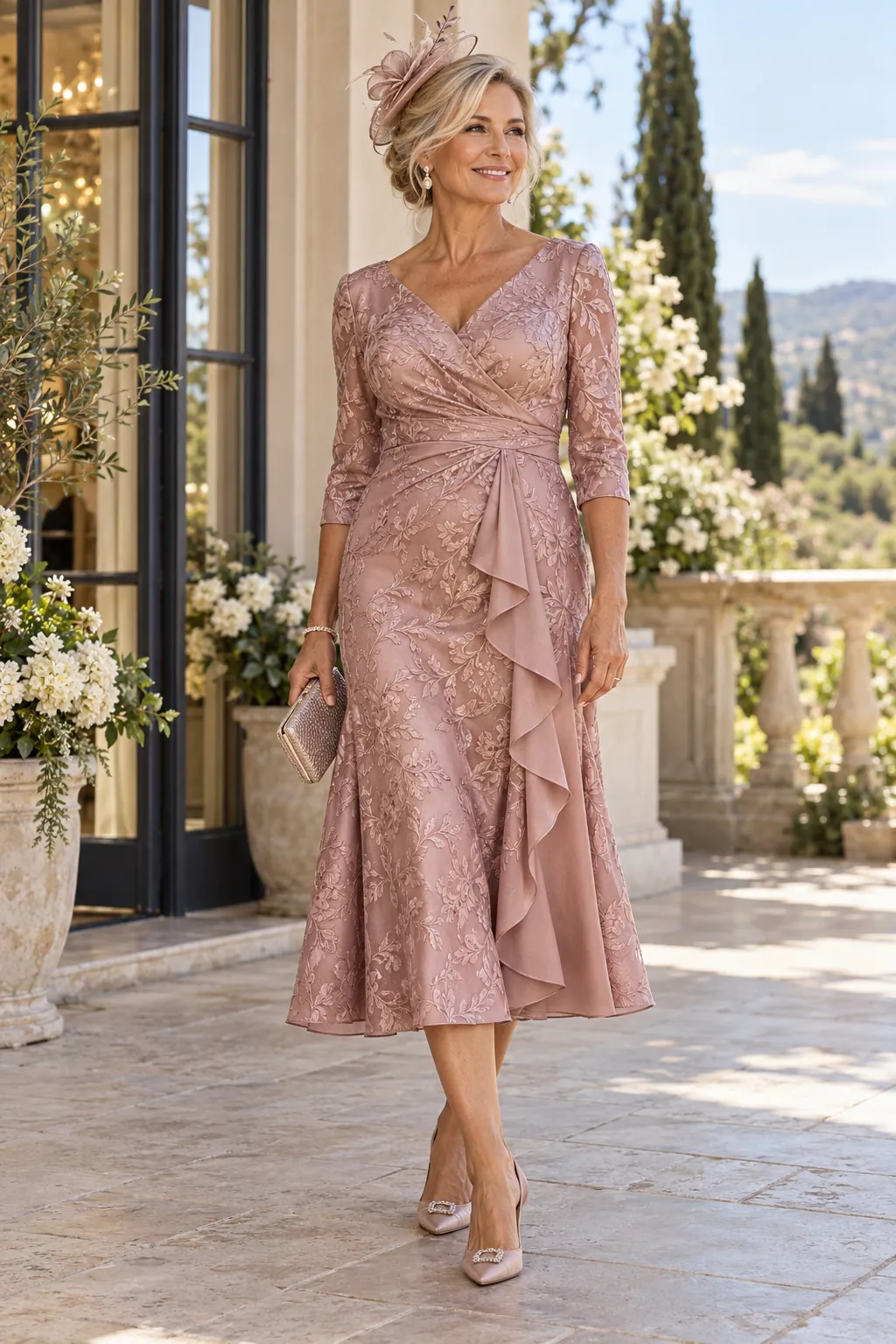
A midi dress sits anywhere from mid-calf to just above the ankle. That’s the whole definition, but it’s worth sitting with for a second, because it explains why this length has quietly taken over as the most popular choice for mothers at Australian weddings over the past few years. It’s long enough to feel formal and considered, short enough that you’re not hauling fabric up a sandstone staircase at a vineyard venue or tripping on hemlines at a beach ceremony in Byron Bay.
We’ve fitted hundreds of mothers for weddings ranging from backyard marquees in the Adelaide Hills to ballroom receptions in Sydney, and the midi keeps coming back as the length that causes the least regret. Full-length gowns photograph beautifully standing still, but they’re a genuine liability on grass, gravel or a dance floor after a few hours. A cropped dress, on the other hand, can feel a touch too casual for a formal ceremony role. The midi splits the difference, and it does it well.
There’s also a practical seasonal argument. Australian weddings happen year-round, and a midi in a heavier crepe works for a winter wedding in Melbourne just as well as a lighter chiffon midi suits a summer wedding on the Gold Coast. You’re not locked into one silhouette the way you might be with a strictly seasonal gown style. If you want to see the range of lengths and fabrics mothers are choosing right now, the mother of the bride dress collection is a good place to start browsing before you commit to anything.
How to Choose the Right Midi Dress
Start with the venue, not the dress rack. A midi that trails slightly below the calf reads as more formal, which suits a church ceremony or a hotel ballroom. A midi that stops a touch higher, closer to mid-calf, moves easier and suits a relaxed outdoor reception where you’ll be on your feet for hours. Think about where you’re actually standing and walking, not just where you’ll be sitting for photos.
Next, think about your own proportions honestly. If you’re shorter, a midi that hits right at the narrowest point of your calf tends to lengthen the leg line more than one that cuts mid-calf. Taller mothers generally have more room to play with a lower midi hem, closer to the ankle, without it looking like a miscalculation. Neither is a rule carved in stone, it’s just where most fittings tend to land once you see yourself in the mirror rather than on a size chart.
Colour matters more than people expect for a midi specifically, because the shorter length means more of your legs and shoes are visible, and that changes how the whole outfit reads. A blush midi dress photographs softer in daylight ceremonies, while a black midi dress is the safer, sharper option for an evening reception or a winter wedding where you want something that won’t date in photos ten years from now. If the bride’s colour palette leans cooler, a blue mother of the bride dress in a midi length often sits nicely alongside bridesmaid colours without matching them exactly, which is the look most brides actually want from their mum.
Fabric is the part people skip past and then regret. A structured crepe midi holds its shape through a long reception and doesn’t crease the way a soft jersey can after sitting through a ceremony and a three-course dinner. If you run warm, a lightweight georgette or chiffon midi breathes better under reception lighting, which matters more than it sounds like it should once you’ve been standing under marquee heaters for three hours.
Top Midi Styles and Options
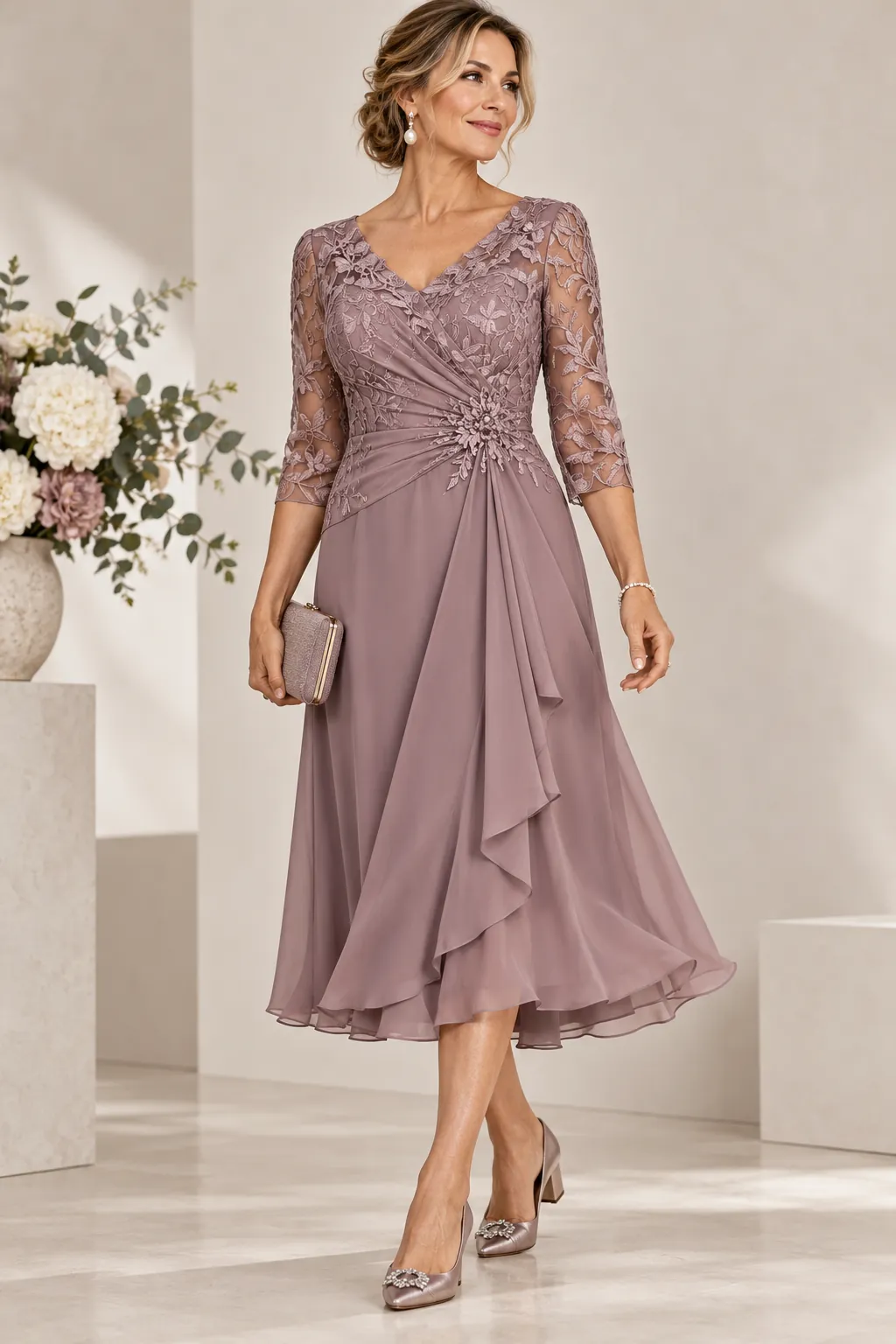
A-line midis are the most forgiving cut going around, and there’s a reason stylists default to them for first-time mother of the bride shoppers. They nip in at the waist and flare gently, which works across pretty much every body shape without needing shapewear to do the heavy lifting.
Wrap-style midis are the other big one, particularly for mothers who’ve had a few kids and want a dress that adjusts to how they’re feeling on the day rather than a fixed, unforgiving seam. The adjustable tie at the waist is doing more work than people give it credit for.
If the wedding has any kind of formality to it, a beaded or embellished midi earns its place. Beading catches light under both daylight ceremonies and evening reception lighting, which a plain fabric just can’t do. The beaded dress collection has a good spread of how much sparkle is too much versus just enough, and it’s worth trying a couple of different beading densities before deciding, because photos under venue lighting can look very different from how a dress looks under shop lights.
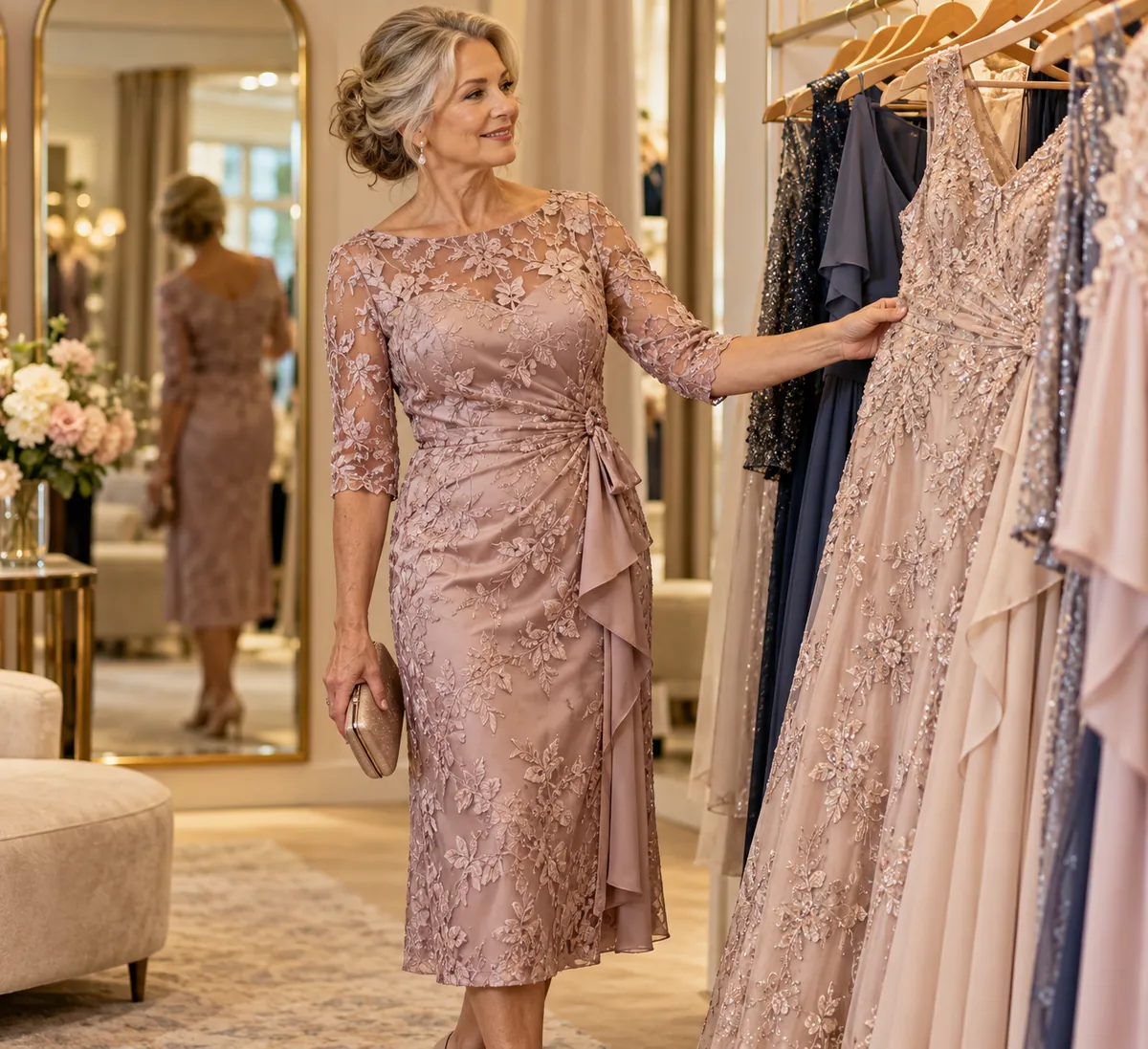
For mothers of the groom specifically, the brief is usually a notch more understated, since tradition still has the mother of the bride choosing her colour and style first. A blush mother of the groom dress or something from the black mother of the groom range tends to complement rather than compete, and a midi length is actually an easier call here than it is for the mother of the bride, because there’s less pressure for it to be the statement piece of the day.
Adrianna Papell has become something of a go-to brand name for Australian mothers specifically because the midi cuts in their range run true to size and the beading is sewn, not glued, which matters after a few hours of dancing. The Adrianna Papell dresses range and the dedicated featured Adrianna Papell styles page both have strong midi options, and there’s a specific Adrianna Papell mother of the groom selection too if that’s the role you’re dressing for.
What to Consider Before You Buy
Order the right size first, then adjust with alterations, rather than ordering a size down hoping to fit it later. A dress that’s comfortable through a full day of photos, speeches and dancing beats one you’re constantly tugging at and adjusting all evening, no matter how good it looks in the mirror at the first fitting.
Think about the shoes before you finalise the hem, not after. A midi’s whole visual balance depends on the gap between hemline and shoe, and that gap changes completely with a one-inch heel versus a three-inch heel. Bring the actual shoes you’re wearing to the wedding to your final fitting, not a similar pair.
Weather and season deserve a second thought too. A brown mother of the bride dress in a heavier crepe reads warm and rich for an autumn or winter wedding, while the same silhouette in a lighter fabric and a brown mother of the groom colourway can work for a daytime spring event just as easily. The colour doesn’t change seasons, the fabric weight does.
Finally, don’t underestimate how long alterations genuinely take. Hemming a midi correctly, especially one with beading or a lining, takes real time in the hands of a good seamstress, and rushing it is how you end up with an uneven hem in your wedding photos. Build that time into your planning the same way you’d build in time for hair and makeup trials.
Tips from the Experts
Stylists who’ve dressed hundreds of mothers for weddings tend to repeat the same few pieces of advice, and they’re worth listening to because they come from seeing what actually goes wrong on the day, not just what looks good in a fitting room.
- Try the dress sitting down, not just standing. A midi that looks perfect standing can ride up uncomfortably once you’re seated for the ceremony or the reception speeches.
- Bring a cardigan or wrap option for outdoor Australian weddings, even summer ones. Evenings cool down fast once the sun’s gone, particularly in the Hills, the Southern Highlands or anywhere with elevation.
- Check the dress against the bride’s colour palette in actual daylight, not just under shop lighting, before you lock in your final choice.
- If you’re torn between two lengths, go with the one that moves easiest when you walk. You’ll be on your feet greeting guests more than you’ll be posing for photos.
If you want a sense of how other mothers have approached these exact decisions, the Mothers Only blog has more fitting and styling advice worth reading before your first appointment, and the about page explains a bit more about who’s behind the styling advice if you’re curious.
Frequently Asked Questions
What Is the Best Midi Mother of the Bride Dress?
There isn’t one single “best” dress, because it depends entirely on your venue, the season and your own comfort with movement. For a formal church or ballroom wedding, a structured crepe A-line midi in a deeper colour tends to work well, while an outdoor daytime wedding suits something lighter and softer. The best dress is the one that still feels comfortable after six hours on your feet.
How Do I Know Which Midi Length Is Right for Me?
Try the dress on with the actual shoes you’ll wear on the day, since heel height changes how the hemline sits and reads. Shorter mothers generally suit a hem closer to mid-calf, while taller mothers can go closer to the ankle without it looking off. Most of all, walk around in it before deciding, not just stand still in front of the mirror.
What Should I Look for When Buying a Midi Dress?
Fabric weight and seam construction matter more than most people expect. A structured crepe or sewn beading holds up through a long reception far better than a cheap synthetic that creases or stretches out of shape. Also check the lining is comfortable against your skin, since you’ll likely be wearing the dress for eight hours or more.
Are There Budget-Friendly Midi Dress Options?
Yes, there’s a genuinely wide price range in midi styles, and a lower price tag doesn’t automatically mean lower quality. Simpler A-line cuts without heavy beading are usually the more affordable end of the range, while hand-beaded or fully lined styles sit higher. Shopping sales periods around late winter and early spring, well before wedding season ramps up, tends to get the best selection at the better prices.