Mother of the Groom Dresses: An Australian Guide
- Mother of the groom dresses don’t need to match the mother of the bride — they need to sit comfortably in the same colour family and formality level.
- Navy, teal, black, burgundy and champagne are the most requested colours this season, with plus-size options available in AU 18–30.
- Try Before You Buy lets you sample dresses at home for $25 each, credited back when you order — no change room, no guessing under shop lighting.
- Australian weddings run across all four seasons, so fabric weight and sleeve length matter as much as colour when you’re shopping mother of the groom dresses.
- Made-to-order gowns can take several weeks to arrive, so start shopping and sizing early.
- What Mother of the Groom Dresses Really Means
- How to Choose Your Mother of the Groom Dress
- Top Colours and Styles Worth Shortlisting
- What to Check Before You Buy
- How Try Before You Buy Works at Home
- Sizing and Plus-Size Options Explained
- Styling Tips From Our Stylists
- Frequently Asked Questions
- References and Sources
What Mother of the Groom Dresses Really Means
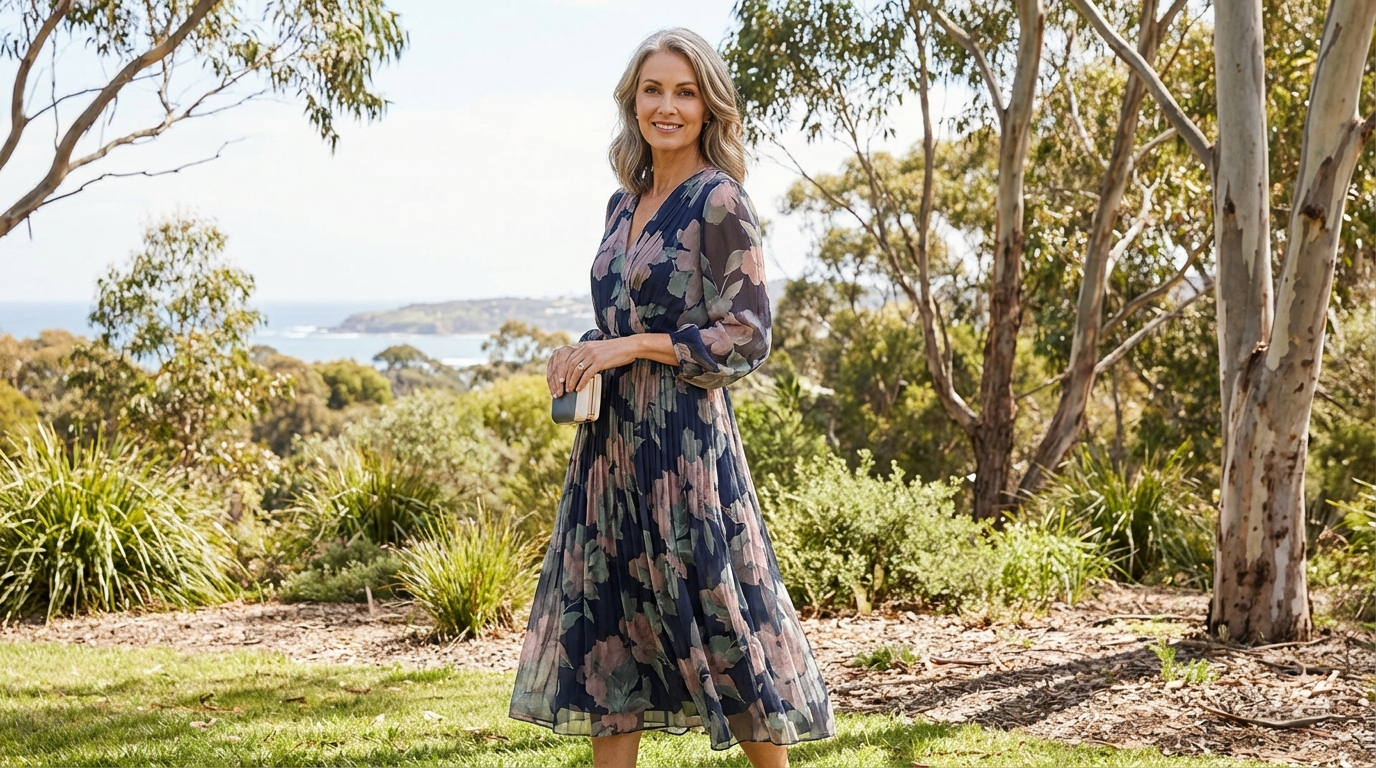
Being asked to dress as the mother of the groom comes with a quieter brief than the mother of the bride role, but it still carries weight. You’re standing beside your son on one of the biggest days of his life, in photographs that will be looked at for decades, and next to a bridal party whose colours and formality you need to complement rather than compete with. The old rule that mothers should stay in muted, forgettable tones has faded. Modern mother of the groom dresses lean into rich, considered colour — deep teal, forest green, navy, burgundy — while still respecting the couple’s palette.
Wedding customs vary a lot by culture, and the expectations placed on the groom’s mother differ accordingly — in some traditions she plays a formal ceremonial role, in others it’s purely a guest-of-honour position (details vary by country). In Australia, the practical guidance is simpler: talk to the mother of the bride before you both commit to dresses, agree loosely on colour family and formality, and then choose the silhouette and fabric that actually suits your body and the venue.
How to Choose Your Mother of the Groom Dress
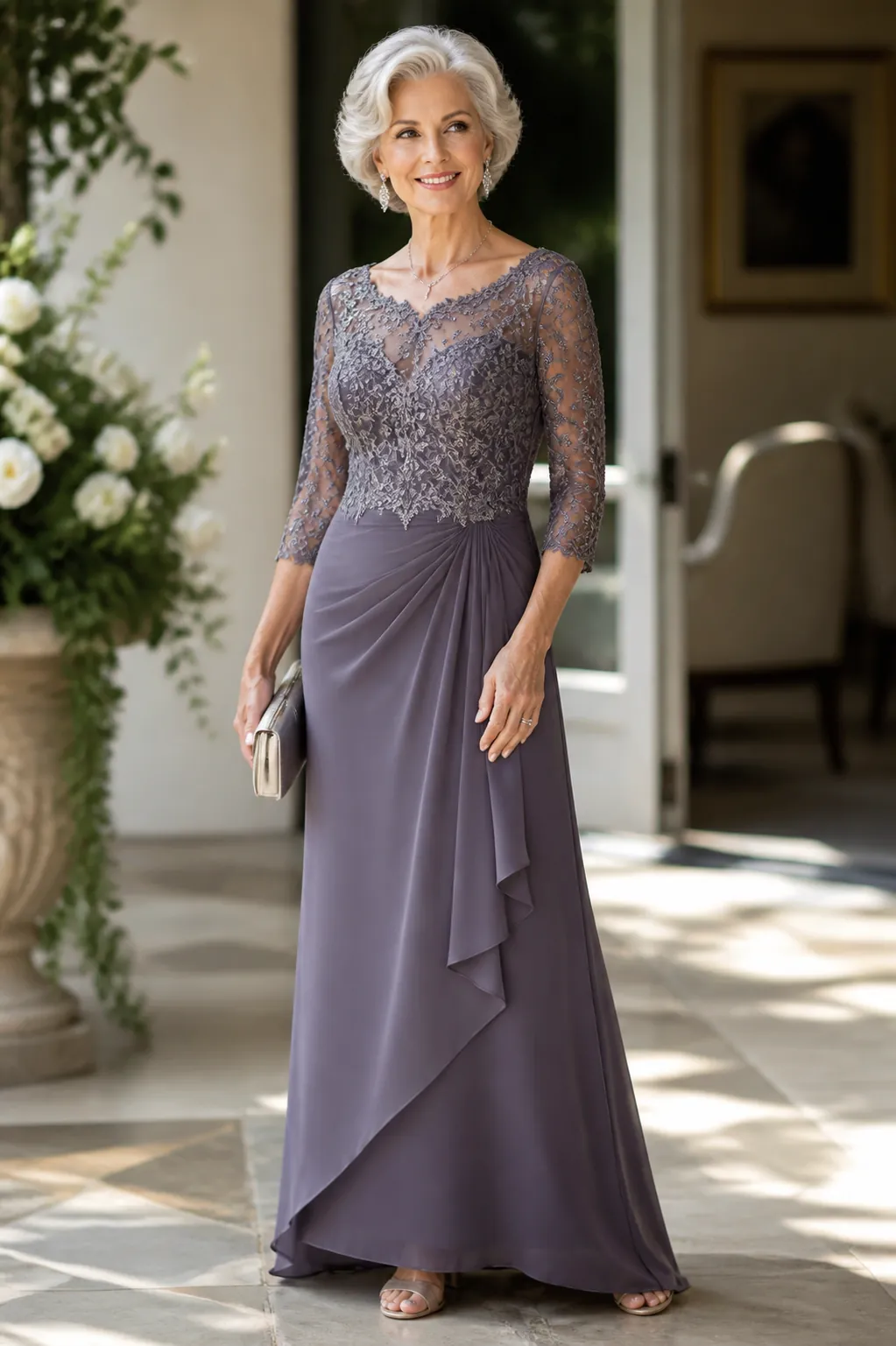
Start with the wedding’s formality level, not the colour. A black-tie evening reception calls for a full-length gown in a fabric with some shine — satin, jersey with metallic thread, or a structured crepe. A relaxed daytime garden wedding suits a midi or tea-length dress in a lighter fabric. Once formality is settled, colour and sleeve length come next.
Season matters more in Australia than most guides admit. A December wedding in Queensland and a July wedding in Victoria call for genuinely different fabric weights, and the country’s size means “wedding season” doesn’t mean the same thing in every state (Australia spans several distinct climate zones). For a warm-weather ceremony, look for breathable jersey or crepe in a lighter weight; for a cooler wedding, a dress with sleeves or a matching jacket keeps you comfortable without adding bulk. The Bureau of Meteorology and other seasonal trackers aren’t the only word on this — ABC’s coverage of Australian seasonal patterns is a useful general reference when you’re planning around an outdoor venue (ABC).
Fit is the other half of the decision. A dress that photographs beautifully on a hanger can sit completely differently once you’re moving through a receiving line, sitting for the ceremony, and dancing later. This is exactly why a home trial before committing matters more for this category than for almost any other formalwear purchase, and it is the point most etiquette guides on the groom’s-mother role keep coming back to.
Top Colours and Styles Worth Shortlisting
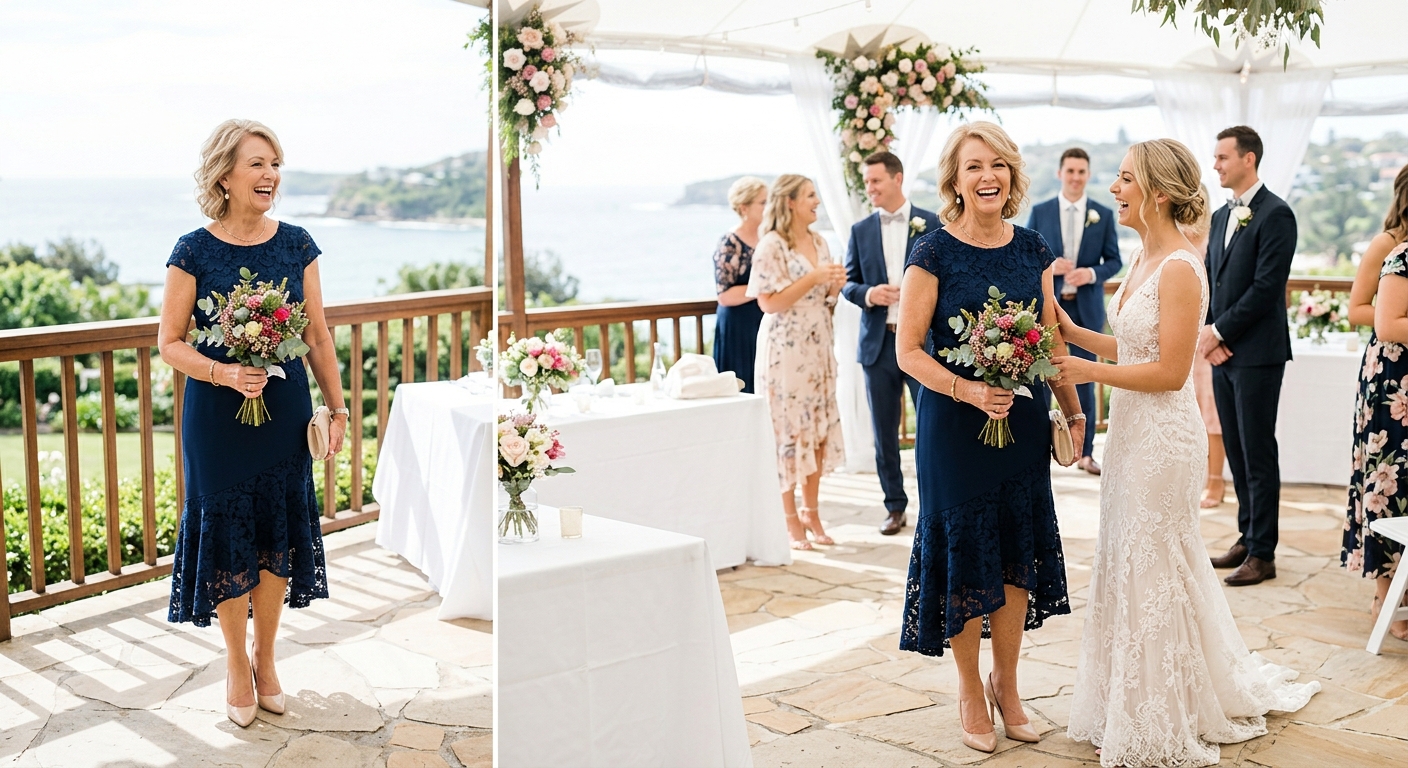
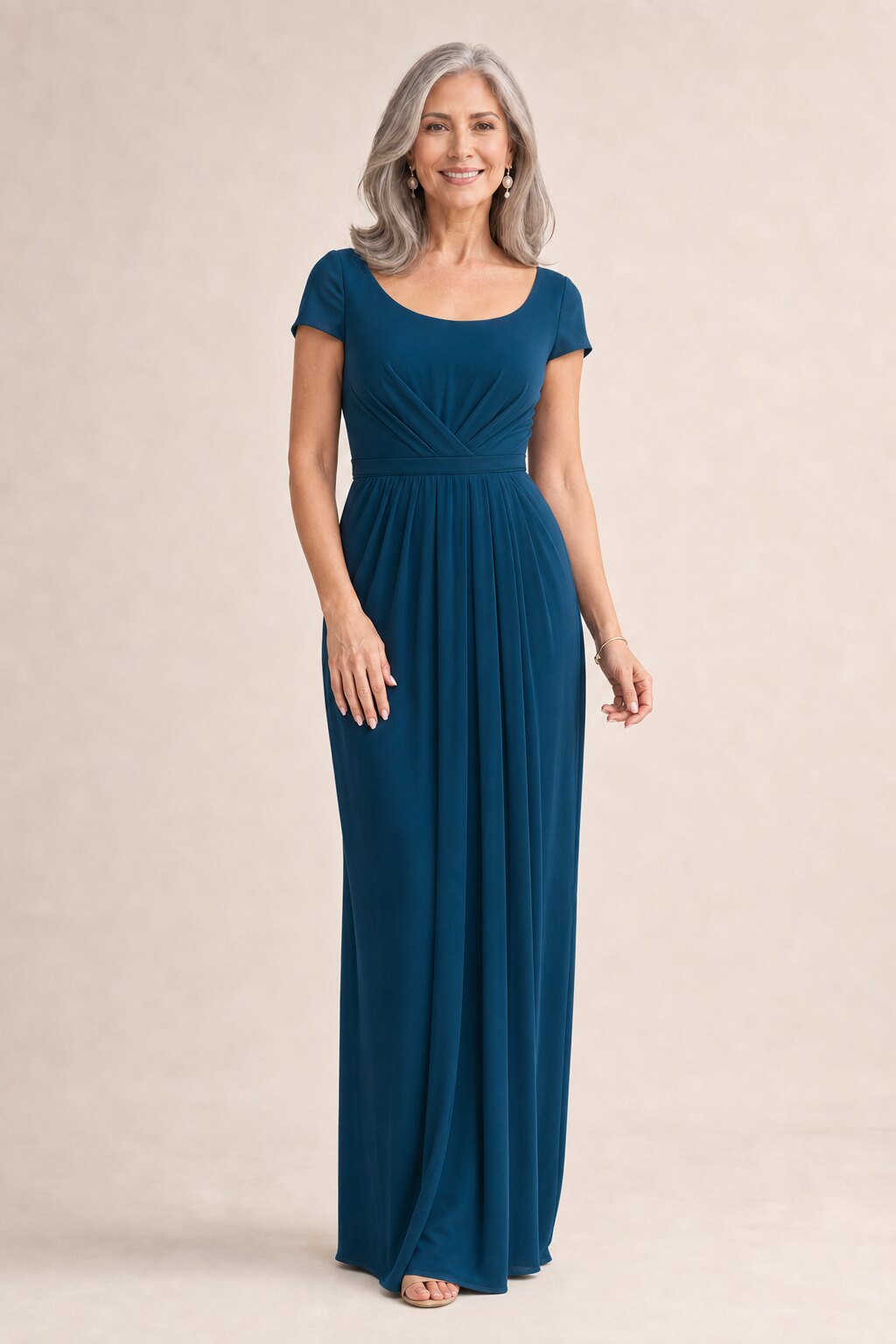
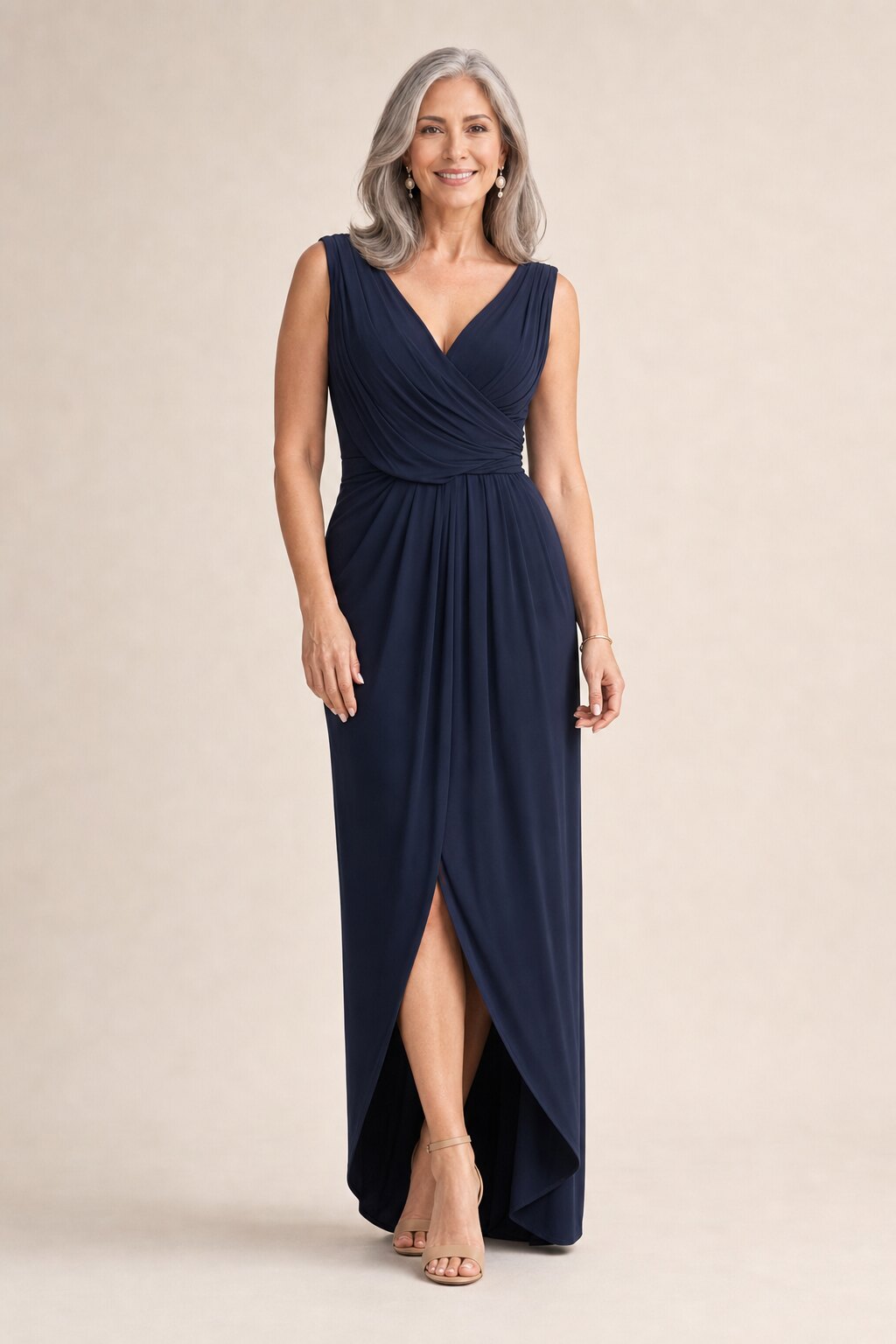
Navy remains the safest and most requested colour for mother of the groom dresses because it reads as formal without competing with the bridal party’s whites and ivories. Shop the current navy mother of the groom dresses range for full-length and midi options.
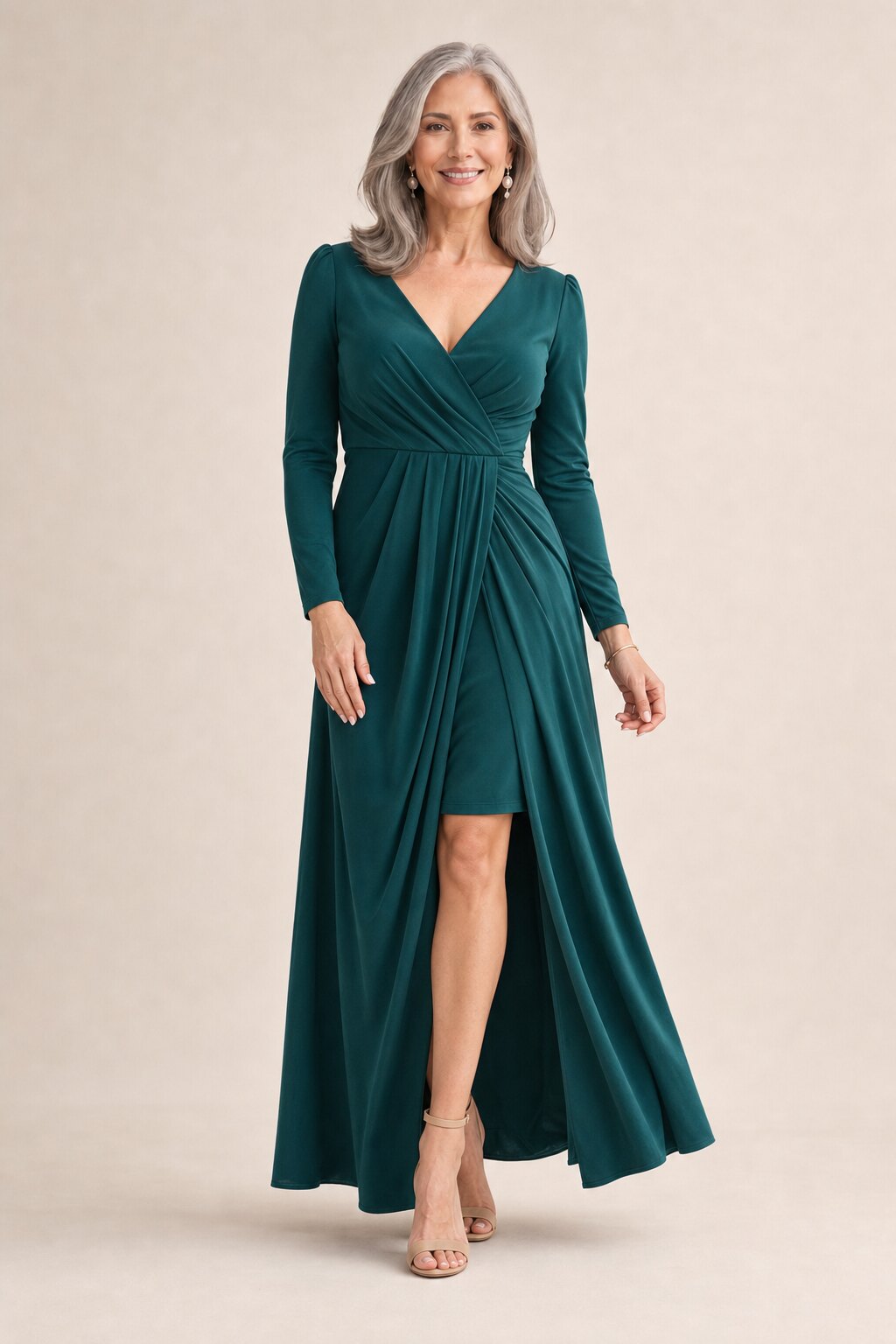
Teal and deep green have become the standout choices for warmer-season weddings — they photograph well against greenery and garden backdrops without looking costume-y. Black, once considered too severe for weddings, now shows up regularly in mother of the groom dressing for evening receptions; browse the black mother of the groom dresses collection if that’s the formality level you need. Burgundy is the standout for autumn and winter ceremonies, giving warmth without the starkness of true red — see the burgundy mother of the groom dresses edit.
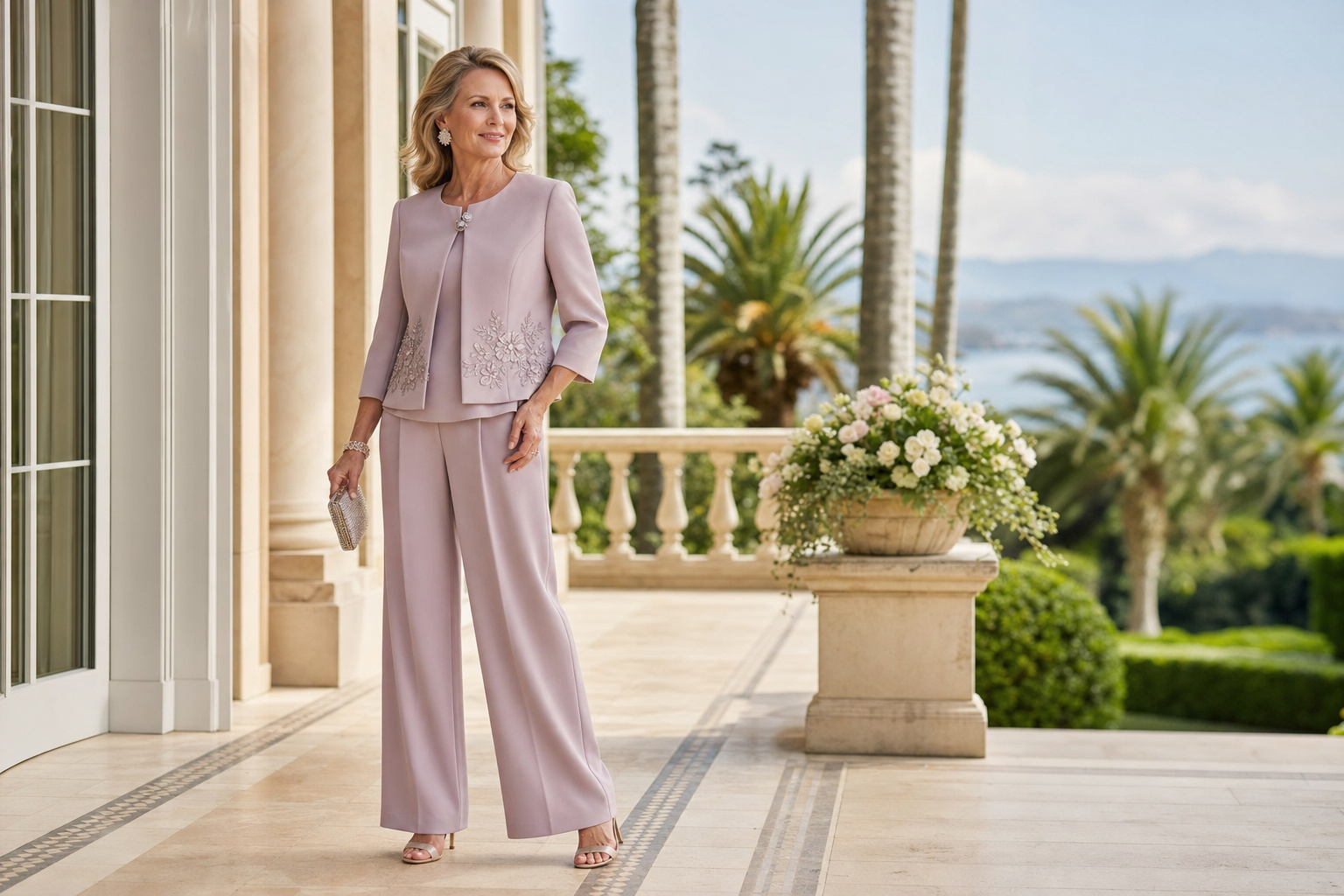
For dresses that draw the eye without shouting, the teal mother of the groom dresses range and the softer champagne mother of the groom dresses options both work well for daytime and beach ceremonies. If you’d rather not go bare-armed, the dresses with sleeves collection covers three-quarter and full-sleeve styles across most of the colours above.
What to Check Before You Buy
Before you add a dress to cart, check three things: the lead time, the return policy, and the fabric care instructions. Many formalwear dresses, including a number of the styles on this site, are made to order, and production plus delivery can take up to several weeks — start shopping well ahead of the wedding date rather than in the final month. Made-to-order dresses generally can’t be returned or exchanged for a simple change of mind, so confirm sizing before you commit.
Fabric also affects how a dress packs, travels and holds up through a long reception. Stretch jersey resists creasing and travels well; structured crepe and satin need more careful packing and usually benefit from a professional steam before the day. If you’re unsure which fabric suits your event, a stylist can talk you through it rather than leaving you to guess from a product photo.
How Try Before You Buy Works at Home
This is the single biggest advantage of buying mother of the groom dresses online rather than relying on a single change-room visit. The Try Before You Buy program works in four simple steps: choose your samples — compare a colour, a fit, or two dresses you keep going back to; the dresses are posted to you Australia-wide, so there’s no change-room lighting to fight against; you get seven days at home to try the dress with your own shoes, your own jewellery, and the wedding palette on the table in front of you; then you send it back and order, with your try-on fee credited to the dress you choose.
The service costs $25 a dress, and that fee comes off the price when you order. Not every style has a physical sample available — for dresses without one, the team sends colour swatches instead so you can still check the shade against your own skin tone and the wedding colours before committing. If you’re torn between two colours or two fits, this is the most reliable way to decide, because it removes the guesswork a single showroom visit can’t solve.
Sizing and Plus-Size Options Explained
Plus-size mother of the groom dresses are available across AU 18–30, with the same colour and style range as the standard sizing run rather than a narrowed-down selection. Browse the dedicated plus size mother of the groom dresses collection to see what’s currently in stock in that range.
Because fit varies between designers and even between styles from the same designer, check the sizing guide before ordering rather than assuming your usual size carries across. If you’re comparing a mother of the groom dress against a mother of the bride dress for the same wedding, sizing between the two ranges also isn’t always identical, so check both against the current chart.
Styling Tips From Our Stylists
Formal dressing etiquette for weddings has loosened over the past decade, but a few practical rules still hold up. Keep jewellery to one statement piece rather than several competing ones — a bold necklace or a striking pair of earrings, not both. A wrap or shawl in a complementary tone solves the problem of a cool church or an air-conditioned reception room without covering the dress entirely; if you’re unsure whether you’ll need one, tell a stylist the venue and the month and they can generally say honestly whether it’s worth adding.
Shoes should prioritise comfort over height — you’ll be standing for photos, walking on grass or gravel, and on your feet for hours longer than the ceremony itself. Formal wear conventions differ across occasions and countries, but for an Australian wedding, block heels or comfortable pumps are the consistent, safe choice across nearly every venue type (general formal wear conventions). If you’d rather see the options laid out by shade before you start trying dresses on, the find my colour lane tool is a faster way to narrow the range than scrolling every collection individually.
Frequently Asked Questions
What is the best mother of the groom dress style?
There’s no single “best” style — it depends on the wedding’s formality and season. Full-length gowns in navy, teal or black suit evening and black-tie receptions, while midi-length dresses in lighter fabrics suit daytime and outdoor ceremonies.
How do I choose a mother of the groom dress colour?
Talk to the mother of the bride first so your colours sit in the same general family without matching exactly. Navy, teal, burgundy and champagne are the most requested shades, and all coordinate easily with most bridal party palettes.
What size range do mother of the groom dresses come in?
Plus-size mother of the groom dresses are available in AU 18–30, alongside the standard size run, across the same colour and style options rather than a limited selection.
How does Try Before You Buy work for MOG dresses?
You choose your samples, they’re posted to you Australia-wide, you get seven days at home to try them with your own shoes and jewellery, then send back and order — the $25 per-dress fee is credited to whatever you buy.