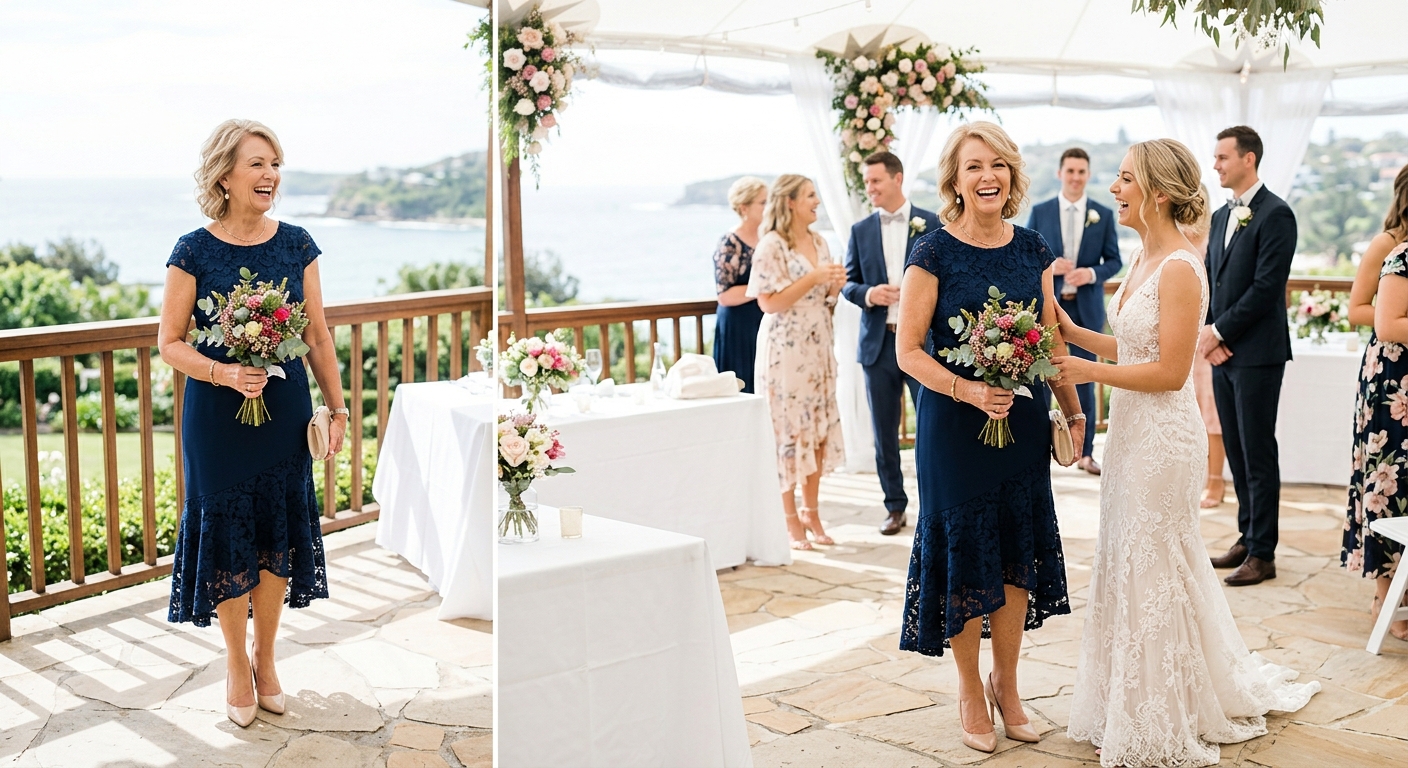
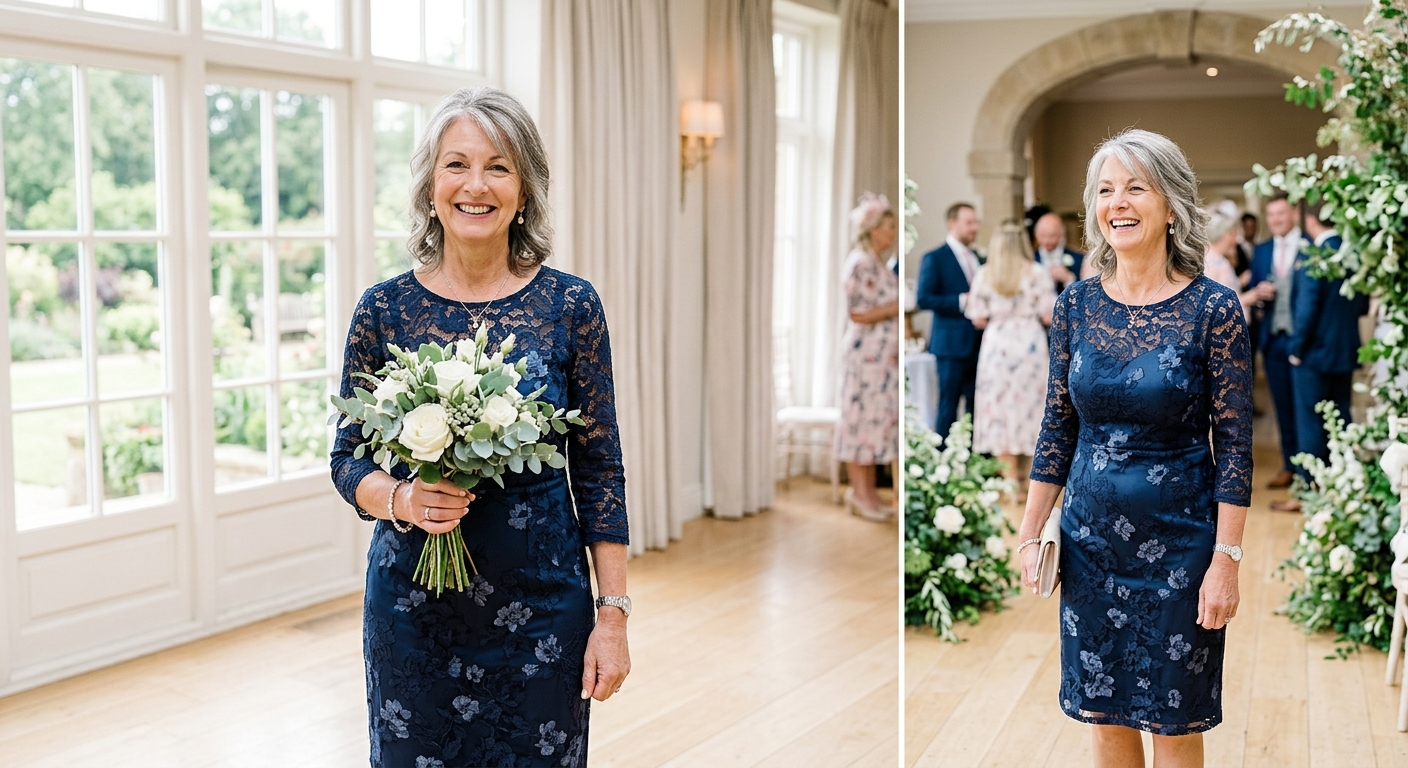
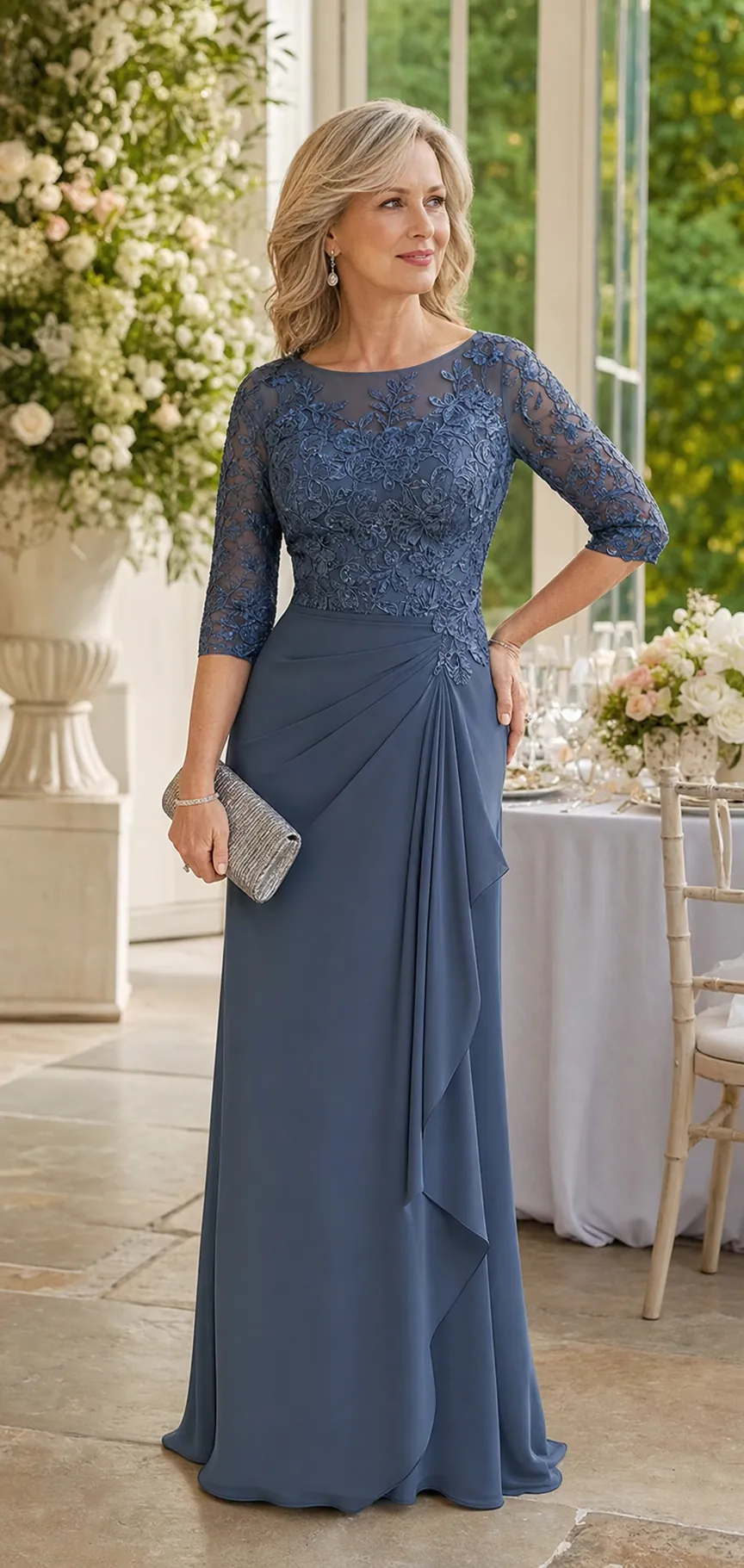
How to Choose a Mother of the Bride Dress for Your Body Shape
Why body shape matters
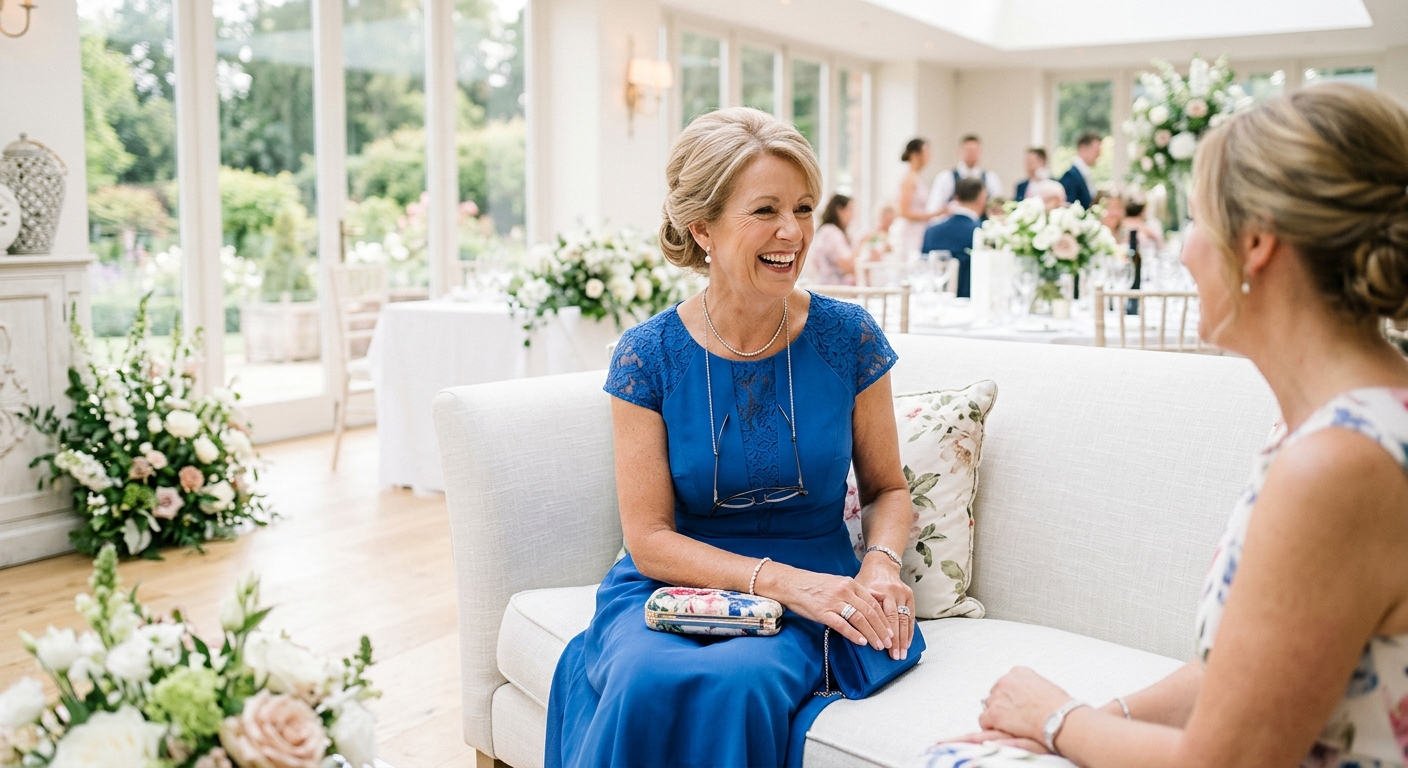
Choosing a Mother of the Bride dress for your body shape is really about proportion, comfort, and confidence. The right silhouette can make you feel at ease in photos, comfortable through a long wedding day, and stylish without feeling overworked. In other words, the dress should help you show up beautifully without making you think about it every five minutes.
Body shape is not about rules or restrictions. It is simply a useful way to narrow down the styles that will feel most flattering on you. Different cuts create different visual effects: some lengthen the body, some define the waist, some soften the shoulder line, and some add balance around the hips. Once you know what you want the dress to do, shopping becomes much easier.
This is especially helpful for formalwear because Mother of the Bride dresses often need to do a little more than an everyday dress. They need to work for ceremony, photos, speeches, sitting, standing, and sometimes dancing. That means the ideal dress should flatter your shape and still feel practical enough for the whole event.
If you are starting the search, browse the collections and the broader homepage so you can compare silhouettes side by side. The blog and about us pages can also help you get a sense of the brand’s styling before you narrow down the final dress.
Style advice from Brides often points to the same truth: the most successful MOB outfits are the ones that balance fit, formality, and comfort.
How to read your shape
The most common body-shape categories are hourglass, pear, apple, rectangle, and inverted triangle. These are not rigid labels — most women are a blend of more than one shape — but they are useful starting points when you want to think about what the dress should do for your proportions.
For example, if you carry more volume through the hips and thighs, you may want a dress that balances the top half of the body. If you carry more through the midsection, you may prefer a silhouette that creates definition without clinging. If your shoulders are broader than your hips, you may want a dress that softens the upper body and adds visual interest lower down.
The real goal is not to hide your shape. It is to create harmony. A flattering dress usually draws the eye where you want it to go, whether that is the waist, neckline, shoulders, or vertical line of the outfit. Once you understand that, the decision-making gets much simpler.
It can also help to think about what you personally like to emphasise. Some women love a defined waist; others prefer a flowing shape that skims the body. Some feel best with sleeves, while others prefer a clean sleeveless line. There is no single right answer — only the dress that works best for you.
If you want to narrow down options visually, the collections pages are a useful place to compare different cuts, lengths, and finishes together. Seeing them side by side makes it much easier to understand which shapes feel most balanced.
Fashion guidance from Harper’s BAZAAR and Vogue often shows how small changes in neckline, sleeve, or waist placement can dramatically change how a formal dress reads on the body.
Best silhouettes by shape
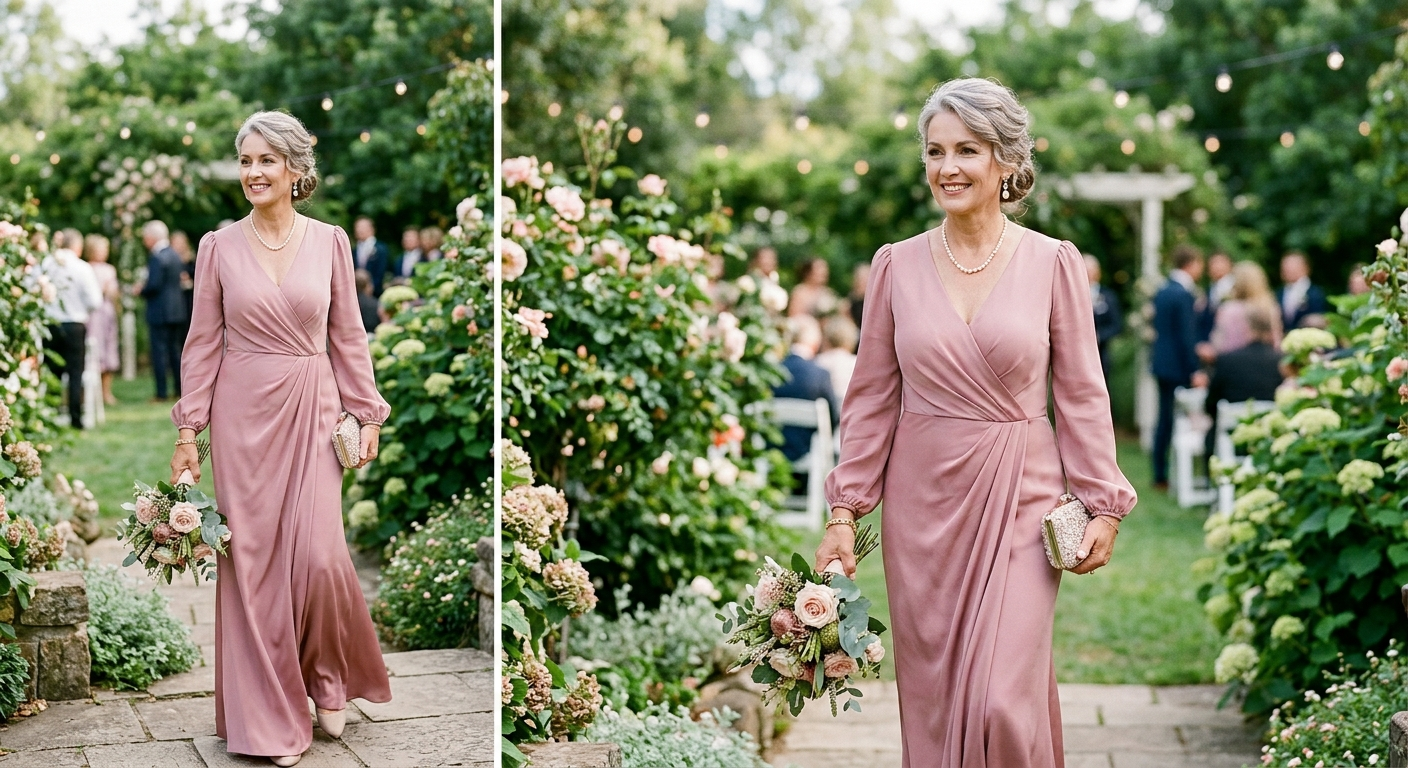
Hourglass shapes often look beautiful in dresses that gently define the waist. Wrap styles, softly fitted gowns, and dresses with shaped bodices can work very well because they follow natural curves without becoming too tight. The goal is to maintain balance and keep the line elegant.
Pear shapes often suit dresses that bring a little extra emphasis to the upper body. A more detailed neckline, a soft sleeve, or a slightly structured shoulder can help create balance. A flowing skirt can then skim over the hips and create a graceful line from top to bottom.
Apple shapes often benefit from dresses that create a longer, cleaner line through the torso. Empire waists, wrap shapes, and softly draped dresses can be especially flattering because they suggest shape without clinging to the midsection. A good fit through the bust and shoulders makes a huge difference here.
Rectangle shapes often look wonderful in dresses that create definition and movement. A dress with waist detail, a softly nipped-in shape, or a skirt that adds volume can create a more sculpted effect. The aim is to add shape where you want it without overcomplicating the outfit.
Inverted triangle shapes often suit dresses that soften the shoulders and add gentle emphasis through the lower half of the body. A flowing skirt, a V-neckline, or a simple sleeve can help bring balance and make the outfit feel more proportioned.
If you are not sure where to begin, start with the most comfortable cut and then adjust based on what you want the dress to highlight. That is often a better approach than trying to force yourself into a trend that does not suit you.
For more examples of formal silhouettes, the blog and about us pages are a helpful place to keep your style direction aligned with the brand’s formalwear range.
Fabric and fit details
Fabric can be just as important as silhouette when you are choosing a Mother of the Bride dress for your body shape. Some fabrics skim beautifully, while others add structure or cling more than you want. If you are trying to flatter your shape, the material needs to support the cut rather than work against it.
Crepe, chiffon, satin with body, and softly structured fabrics are common favourites because they drape neatly and tend to look polished across a range of body types. Heavier fabrics can be lovely too if they still move gracefully. The thing to avoid is any material that feels stiff, too sheer, or uncomfortably clingy in the wrong areas.
Fit is another major factor. A dress may be the right shape in theory but still feel wrong if the shoulders sit badly, the waist is too loose, or the bodice pulls. The best fit is the one that allows you to move naturally without constant adjustment. That matters even more in formalwear, where a small fit issue can be obvious in photos.
Length also affects how a dress reads on the body. A longer line can create elegance and make the body look more streamlined, while a midi length can be flattering when you want to show a little ankle and keep the look lighter. There is no universal rule — just the length that makes the silhouette feel complete.
If you are comparing styles, use the collections view to see which fabrics and cuts feel most flattering at a glance. That can save a lot of time when you are narrowing down options.
Wedding style advice from Martha Stewart Weddings and Brides often notes that the most flattering formalwear usually comes down to proportion, fabric movement, and ease of wear rather than elaborate design details.
Shopping tips that save time
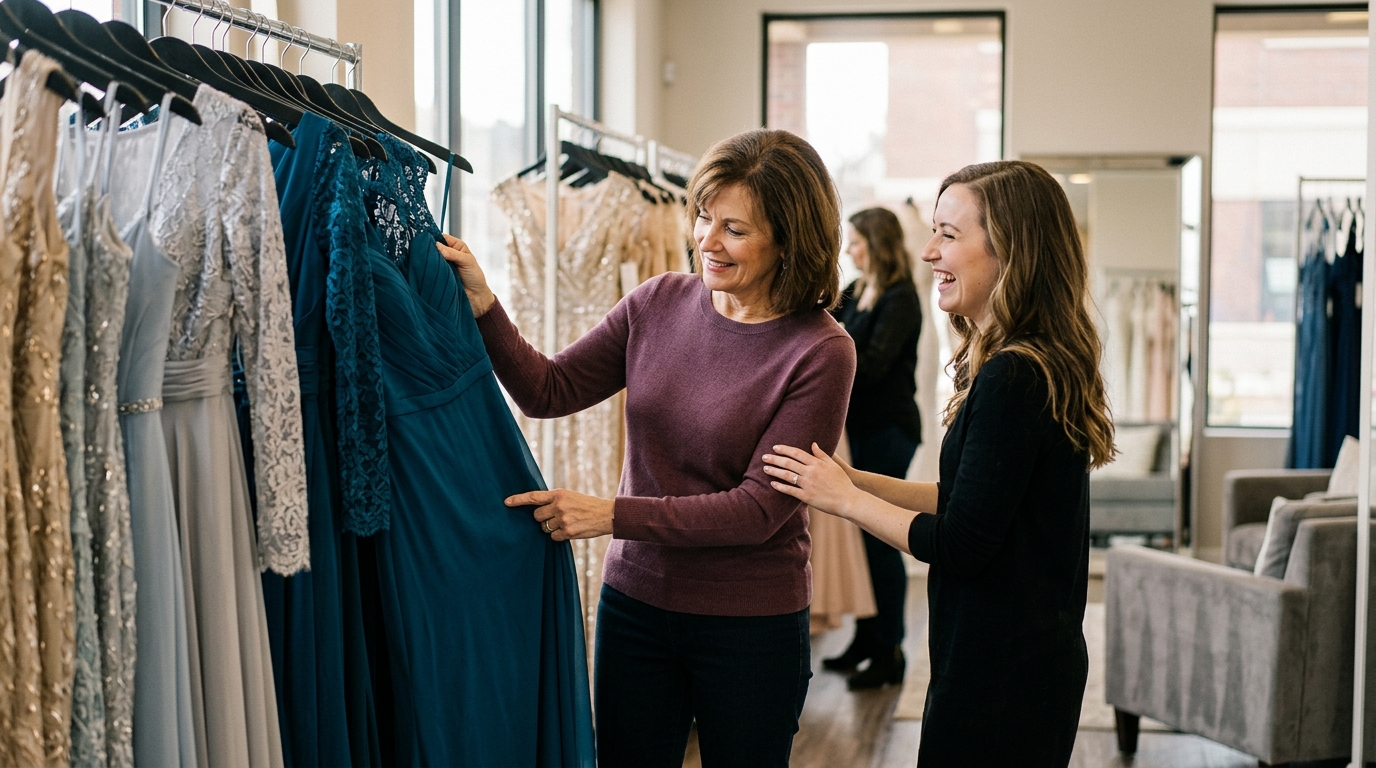
Shopping for a Mother of the Bride dress is much easier when you have a clear plan. Start by thinking about the wedding formality, the season, and what you personally like to wear. Then narrow your options by silhouette rather than opening up every style at once. This keeps the process focused and stops you from getting overwhelmed by choices that are never going to work for you.
It also helps to try on a few different lines of fit, even if you think you already know what will suit you. Sometimes a shape you were not expecting turns out to be the most flattering once it is on. The key is to stay open while still having a clear sense of what you want the dress to do.
Think about how much support or coverage you prefer. Some women feel best in sleeves, some prefer a more open neckline, and others want a dress that defines the waist without feeling restrictive. Your comfort preferences should be part of the buying decision from the start.
Budget can be handled thoughtfully too. You do not need the most expensive dress to look elegant; you need the one that fits well, suits the wedding, and makes you feel confident. Once the dress itself is right, accessories can do a lot of the finishing work.
The brand’s homepage and blog are good places to revisit if you want to compare the mood of the collection before finalising your choice. It is easier to make a solid decision when you can step back and see the wider styling direction.
For broader context, style coverage at Harper’s BAZAAR consistently reinforces the idea that a dress should flatter the wearer first and fit the occasion second — and the best pieces do both at once.
Styling tips that finish the look
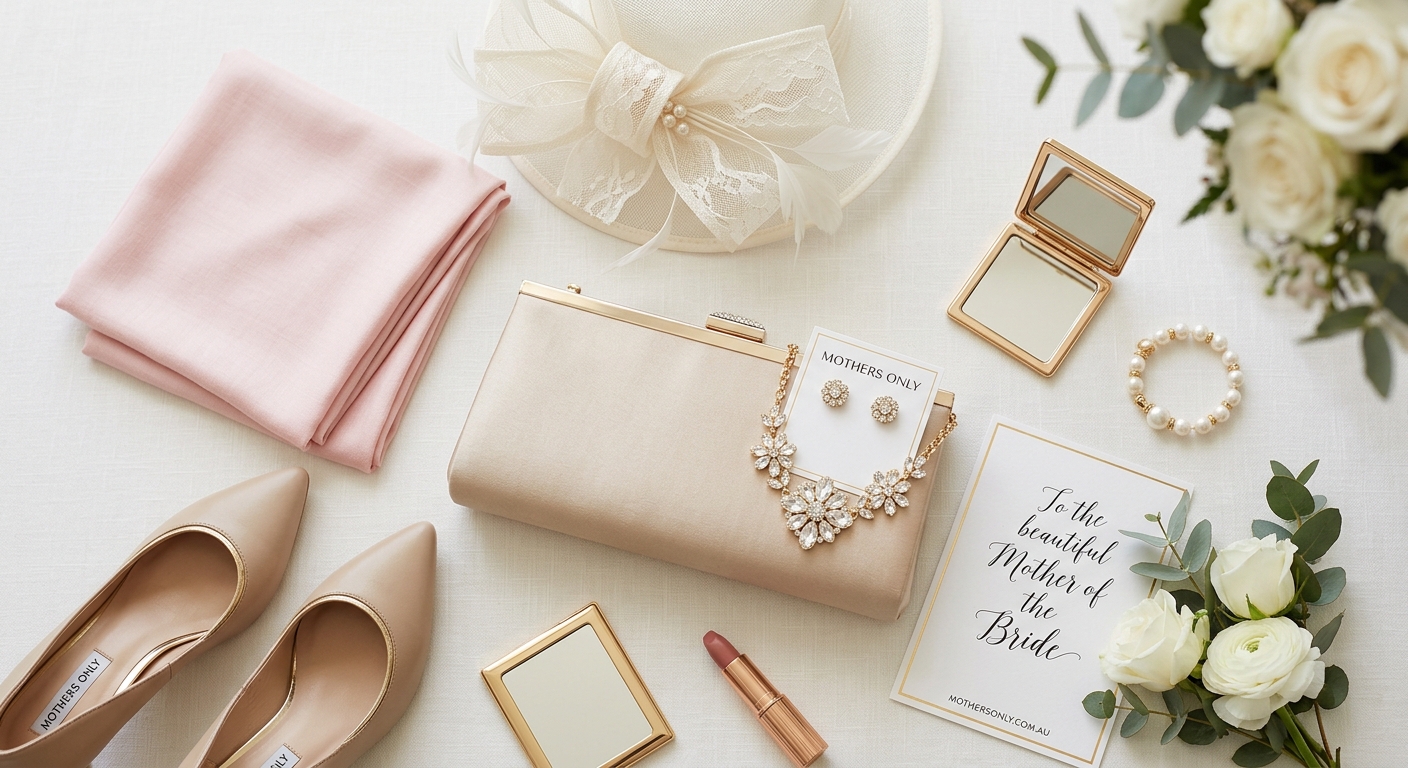
Once you have the right dress, styling is what completes the outfit. Shoes, jewellery, and a wrap or jacket should all feel like they belong to the same story. If you are using a stronger silhouette, it is usually best to keep the accessories simple so the dress remains the hero.
Colour can help too. A neutral shoe or metallic accessory often works well because it keeps the focus on the dress and your face rather than distracting from the overall shape. This is especially useful in formal photos where the whole outfit needs to look tidy from every angle.
Hair and makeup can also support the silhouette. A dress with strong lines may suit a more polished hairstyle, while a softer dress might pair well with looser styling. The aim is to keep the full look in balance so nothing feels too heavy or too casual.
If your dress includes sleeves or a detailed neckline, choose accessories that do not compete with those features. Let the dress’s structure do the work, and use the finishing pieces to refine rather than amplify. That is usually where the most elegant result comes from.
Before the wedding, try the entire outfit together — dress, shoes, jewellery, wrap, and undergarments — so you can see whether everything is working in harmony. That way, you have time to make small adjustments if needed.
If you want one last look at the range before deciding, the collections and about us pages can help you compare the outfit against the tone of the wedding one more time.
Frequently asked questions
How do I choose a Mother of the Bride dress for my body shape?
Start with the silhouette that makes you feel balanced and comfortable, then look for a fit that works with your proportions rather than fighting them. The best dress is the one that flatters your body and suits the wedding formality.
What dress shapes suit most body types?
Soft A-line, wrap, and gently fitted silhouettes are often flattering because they create balance and movement. They can work well across different body shapes when the fit and fabric are right.
What fabric is most flattering for formal MOB dresses?
Crepe, chiffon, satin with body, and structured but soft fabrics are all strong choices. They tend to drape well, look polished, and work across a range of body types.
Should I choose my dress based on my body shape or the wedding theme?
Ideally, both. The dress should suit the wedding’s formality and season while also flattering your body shape so you feel confident wearing it all day.