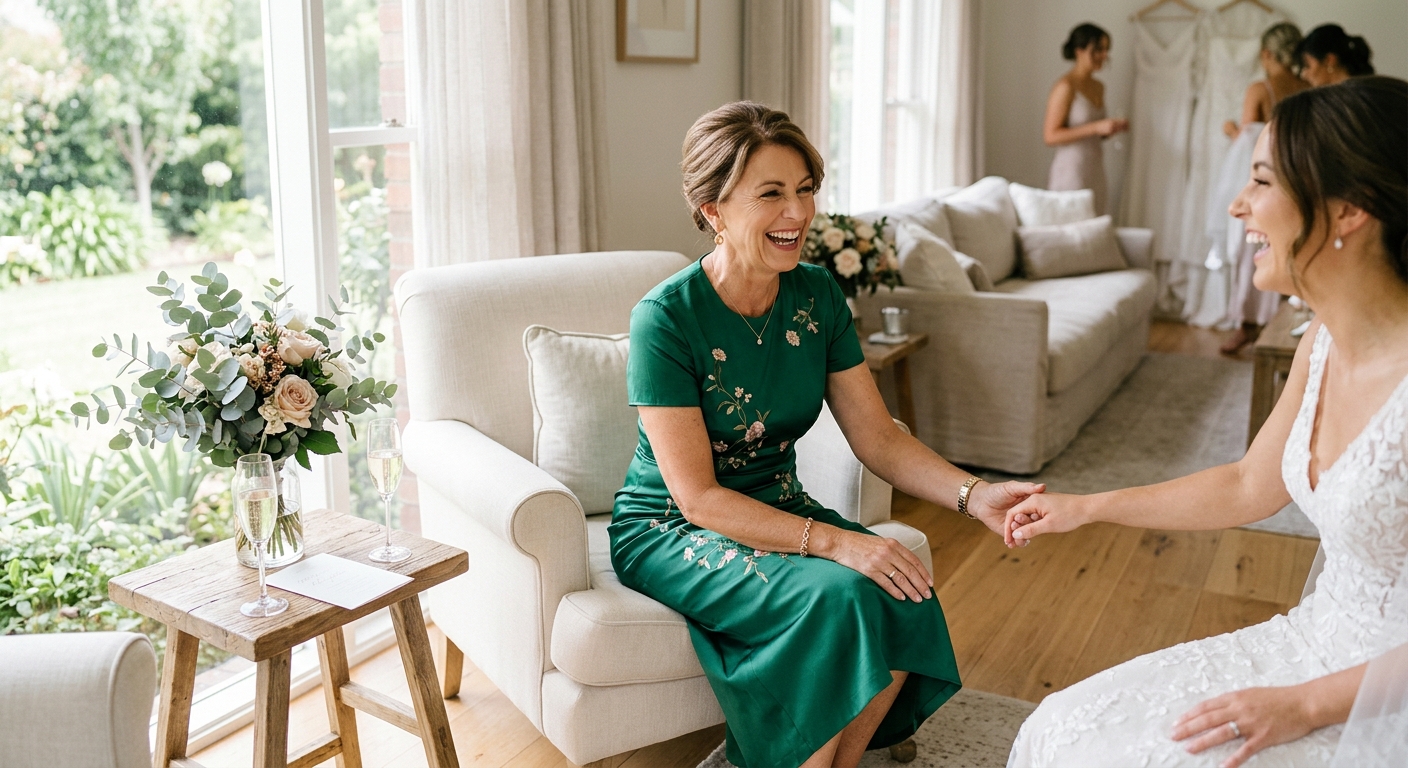
Mother of the Groom Outfits for Over 50s and 60s Australia

Finding the right mother of the groom outfit for over 50s and 60s in Australia usually comes down to one thing: balance. Most women are not looking for something matronly, but they also do not want a dress that feels too young or too trend-driven. The goal is polished, comfortable, and genuinely flattering — a look that feels special enough for the wedding without looking forced.
The best place to start is not age. It is the wedding.
Age can influence what you feel comfortable in, but it should not box you into a narrow set of styles. A better first filter is the venue, dress code, season, and your preferred level of coverage. For formal evening weddings, a full length gown often makes the most sense. For daytime weddings, a refined mid length dress can feel every bit as elegant while being easier to wear.
What tends to work especially well for over 50s and 60s?
- Soft structure instead of anything stiff or boxy
- Sleeves or shoulder coverage if that helps you feel more confident
- Beautiful fabric with movement, such as chiffon, jersey, crepe, satin, and light beading
- Classic colours like navy, green, burgundy, blush, champagne, and deep blue
- Elegant embellishment rather than heavy decoration

Silhouettes that flatter without hiding you
The most common mistake we see is choosing a dress a size too big in the hope it will feel more forgiving. It almost never works. A dress that skims the body and is cut properly through the shoulder and waist will always look more elegant than one that hangs. If you are worried about a particular area, the answer is usually a better cut rather than more fabric.
A softly fitted A-line is the most reliable starting point. It defines the waist, moves easily, and works across almost every venue and dress code. If you prefer a little more shape, a dress with gentle ruching through the midsection is very forgiving without looking like it is trying to hide anything, because the gathers break up the line rather than cling to it.
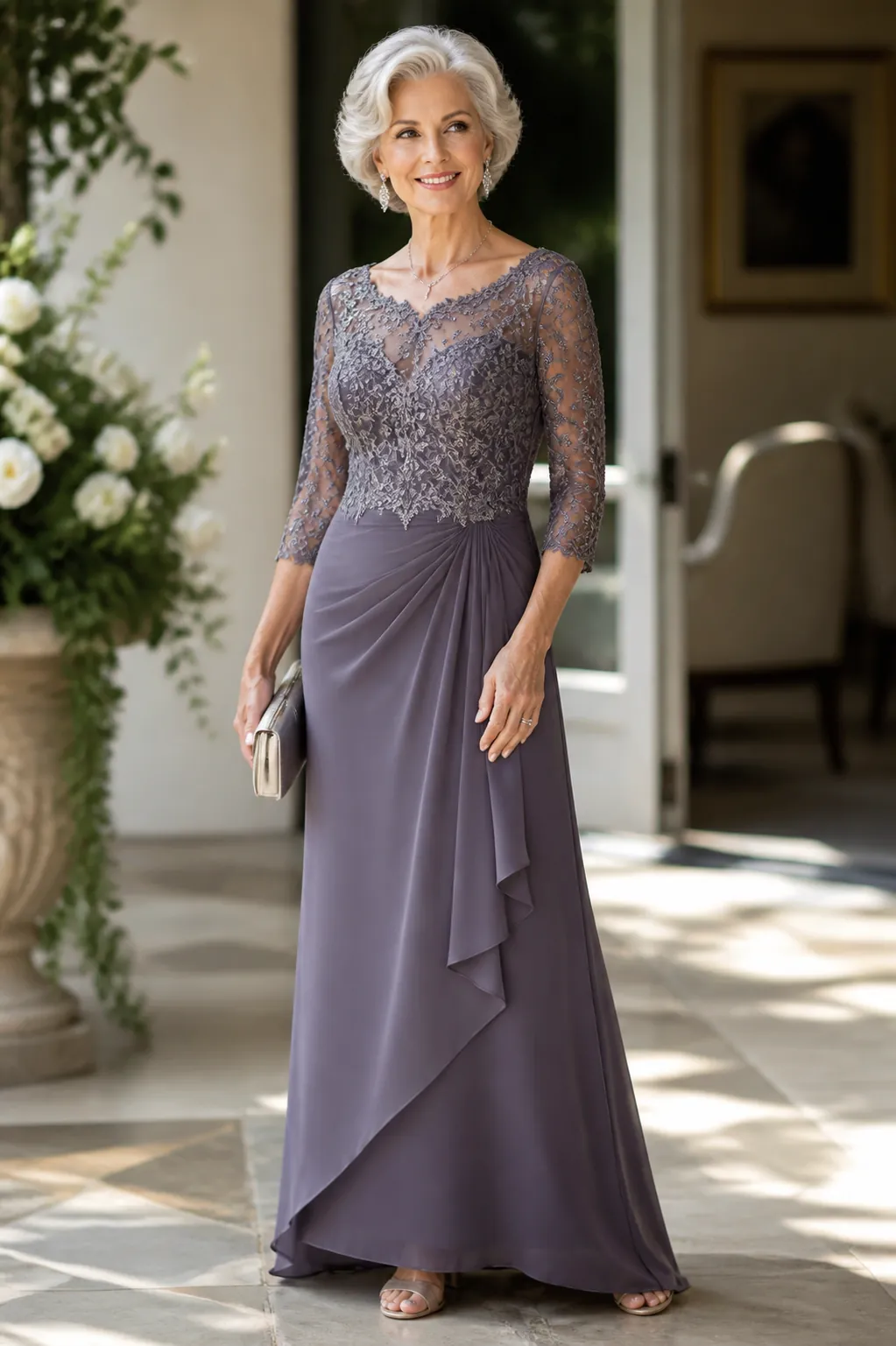
Column and sheath styles look beautiful on many women over 50, particularly in a heavier fabric like crepe or satin that holds its own shape rather than following yours. If you like the idea but want more coverage, look for a column dress with an overlay or a matching jacket, which gives you the clean line without the exposure.
Wrap and faux-wrap dresses deserve a mention because they solve several problems at once. The diagonal line is flattering across the bust and waist, the neckline is adjustable, and the shape tends to be comfortable for sitting through a long reception. If you are not sure where to begin, this is a good style to try first because it tells you quickly what you like.
Whatever shape you choose, look at it in the mirror sitting down as well as standing. A dress that looks beautiful standing but pulls badly when you sit is going to bother you for the entire day.
Sleeves and coverage: the question we are asked most
Sleeves are far and away the most common request from mothers of the groom, and there is nothing dated about wanting them. The modern versions look nothing like the boleros of twenty years ago. A well-cut sleeve is a design feature now, not a compromise.
A three-quarter sleeve is the most versatile option. It covers the upper arm and elbow, sits neatly under a wrap if the evening cools down, and does not compete with jewellery. If you want coverage without weight, a sheer or illusion sleeve gives you the same visual line in a fabric light enough for a warm day, and it photographs beautifully because it catches the light rather than blocking it.
Cap and flutter sleeves are a good middle ground if you want the shoulder covered but not the whole arm. They suit daytime weddings especially well. A split or cold-shoulder sleeve can look modern, though it is worth trying on because the cut varies enormously between designers.
If you fall in love with a sleeveless dress, you have not made a mistake. A lightweight wrap, a shawl or a matching jacket through the ceremony and photographs gives you coverage when you want it and can come off later. Browse the full range of mother of the groom dresses with sleeves to see how different the options are.
Common styling directions that work beautifully
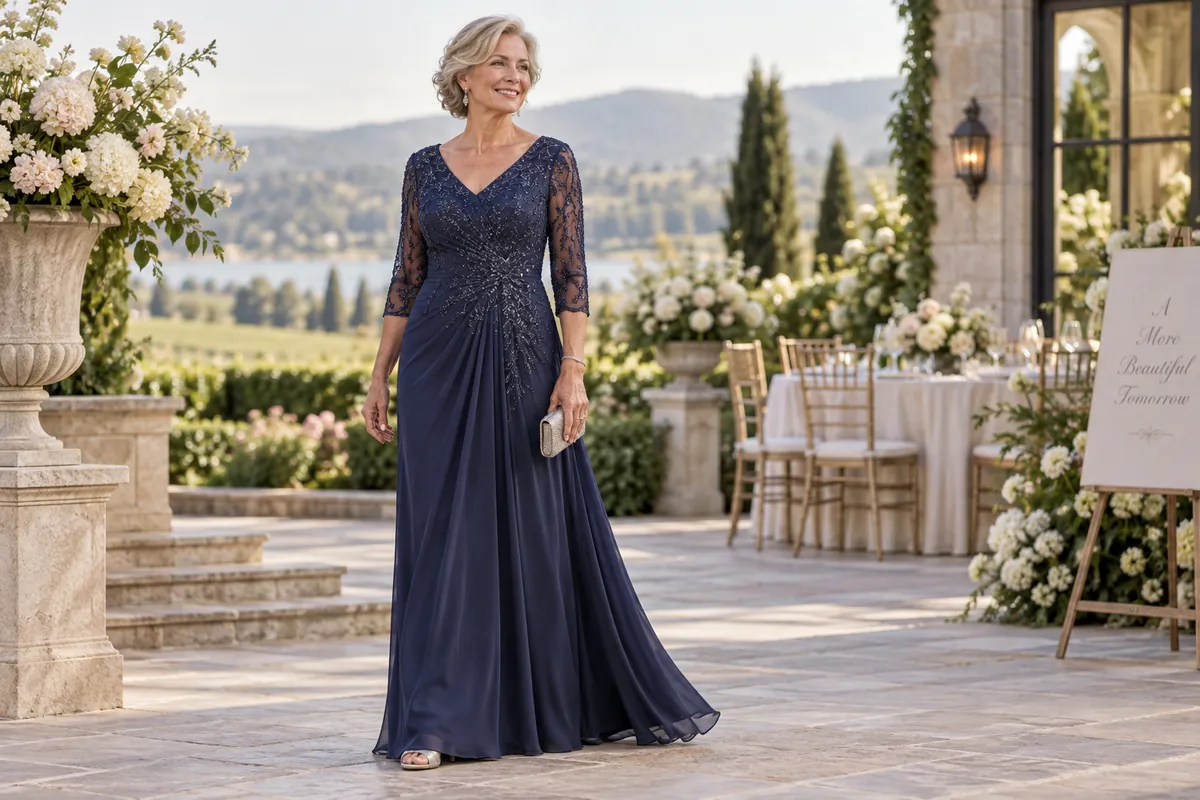
For conservative or formal weddings, a long gown in navy, emerald, or burgundy is hard to fault. For a softer daytime look, a polished midi with sleeve detail or flattering ruching is usually a strong option. If you want occasion sparkle, our beaded and sequin collections give you that special-event finish without needing to over-accessorise.

Colours that work, season by season
Colour is where most mothers of the groom get stuck, and the Australian calendar makes it more complicated than it needs to be. A wedding in February and a wedding in July call for genuinely different palettes, even at the same venue.
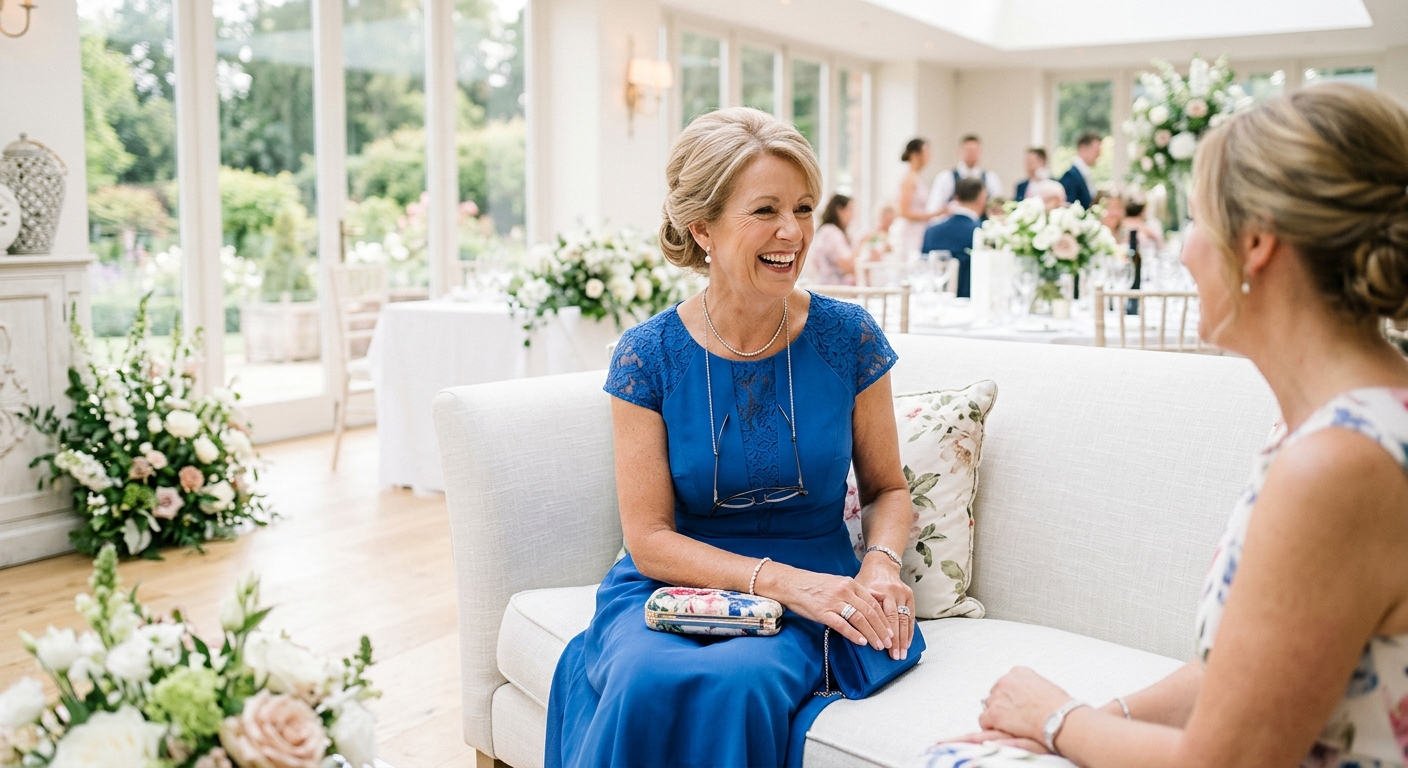
For spring and summer weddings, lighter and more luminous tones photograph best in strong natural light. Blush, champagne, soft blue and sage all sit comfortably in daylight without washing you out. If you prefer more depth in warm weather, a mid-tone such as teal gives you presence without heat.
For autumn and winter weddings, richer colours come into their own. Navy, burgundy and green look expensive in lower light and pair beautifully with heavier fabrics like velvet, satin and crepe. Navy in particular is a workhorse: formal enough for an evening wedding, soft enough for a daytime one, and it suits almost every skin tone.
Two rules hold in every season. Avoid anything close to white or ivory unless the bride has specifically asked for it. And be careful with a colour that matches the bridesmaids exactly, because you can end up looking like part of the bridal party in photographs. A shade or two away from the wedding palette is usually the sweet spot.
What to wear when the mother of the bride has already chosen
This is the part that causes the most anxiety, and it is worth saying plainly: coordinating does not mean matching. The two mothers should look like they belong at the same wedding, not like they planned a uniform.
The most practical approach is a short conversation early. Ask what colour and length she has chosen, and roughly how formal she is going. That is usually all you need. If she has chosen a full-length navy gown, you might choose a full-length green or burgundy, or a navy in a clearly different fabric and silhouette. Matching the level of formality matters far more than avoiding her colour.
If she has chosen first and you are struggling to find something that sits alongside it, our mother of the groom collection is organised by colour and length so you can filter to what you need rather than scrolling through everything.
One convention worth letting go of is the idea that the mother of the groom should wait for the mother of the bride and then defer to her. Modern weddings do not work that way. Ask, coordinate, then choose something you genuinely like.
Mother of the groom does not mean second best
The mother of the groom should absolutely look dressed for the significance of the day. If the wedding is formal, do not be afraid of a proper gown. If it is a relaxed venue, you can still choose a beautifully cut dress with refined detail so the look feels elevated and wedding-appropriate.
Getting the size right
Occasion wear is not sized like everyday clothing, and this catches a lot of women out. Formal dresses are often cut smaller than high street sizing, and the fit varies noticeably between designers. It is completely normal to be one size in a jersey dress and another in a structured satin gown from a different label.
Across our range you will find sizes from AU 6 to AU 30, though not every style is made in every size. The most reliable approach is to measure yourself properly — bust, waist and hips — and then work from the size chart for the specific designer rather than assuming your usual size will translate.
Most mothers need some alteration, and that is normal rather than a sign something has gone wrong. A hem taken up or a waist brought in is what turns a dress that fits into a dress that looks made for you. Allow around two weeks between delivery and the wedding for alterations, and more if you can.
If you would rather be certain before committing, our Try Before You Buy service lets you have samples sent to you so you can confirm size and colour at home. Samples ship free Australia-wide by Express Post, which makes it practical even if you are nowhere near a showroom.
Dressing for the venue and the Australian climate
The venue often decides more about your outfit than the dress code does. An outdoor ceremony on grass in January is a very different problem to a ballroom reception in June, and a dress that works brilliantly at one can be miserable at the other.
For outdoor and garden weddings, think about the ground as much as the temperature. A narrow heel sinks into lawn, so a block heel or a wedge will save you a great deal of discomfort. Fabrics that breathe and move — chiffon, light crepe, jersey — handle heat and breeze far better than anything heavily structured.
For beach and coastal weddings, a lighter fabric and a slightly shorter length are practical rather than casual. Wind is the factor people forget: a very floaty skirt can be difficult to manage, so a dress with a little weight to it often photographs better than the lightest option in the room.
For formal indoor and evening weddings you have far more freedom. Heavier fabrics, beading and full-length gowns all work beautifully, and air conditioning means you can choose sleeves and structure without overheating. Our formal mother of the bride and groom dresses are a good place to start for black-tie and evening events.
Whatever the venue, check the forecast about a week out and have a plan for the opposite. A wrap in your bag costs you nothing and has rescued a lot of mothers at evening receptions.
How far ahead should you start looking?
Earlier than most people expect. Many of the designers we stock, including Tania Olsen, Adrianna Papell and Jenny Yoo, make dresses to order, with production times that generally run between eight and sixteen weeks depending on the label. Shipping and alterations sit on top of that.
As a working rule, start looking around nine to twelve months before the wedding and aim to have your dress ordered at least sixteen weeks out. That is deliberately conservative: it gives you room to change your mind, to have alterations done without rushing, and to avoid paying for expedited anything.
If your wedding is sooner than that, you have not run out of options. In-stock dresses dispatch within two business days, and many designers offer rush production. It is worth asking what is genuinely achievable for your date before you assume a dress is out of reach.
How to shop without getting overwhelmed
- Start with the silhouette: full length or mid length.
- Choose your comfort level on coverage, especially whether you want sleeves.
- Narrow by colour: navy, green, burgundy, or blue.

Frequently asked questions
What colour should the mother of the groom avoid?
Anything close to white or ivory, and generally anything that matches the bridesmaids exactly. Beyond that the field is open. Navy, green, burgundy, blush and champagne are all safe and popular choices.
Should the mother of the groom wear long or short?
Follow the dress code and the mother of the bride’s length rather than your age. Full length for formal and evening weddings, mid length for daytime and less formal ones. Neither is more appropriate for over 50s than the other.
Does the mother of the groom have to check with the mother of the bride?
Not check, but it is worth a conversation. Knowing her colour, length and level of formality makes your own decision much easier and avoids the two of you looking either identical or mismatched.
Are sleeves more appropriate for over 50s?
More popular, but not more appropriate. Sleeves are a comfort and confidence choice, not an age rule. A sleeveless dress with a wrap is equally correct if that is what you prefer.
How much should I expect to spend?
It varies considerably by designer and fabric. The more useful question is where you want to spend: a well-cut dress in a good fabric with minor alterations will nearly always look better than a more expensive dress that does not fit properly.
If you want help refining the look further, read our guide to modern mother of the bride dresses in Australia.